Trump Administration sues California to block new law protecting schools and homes from nearby drilling

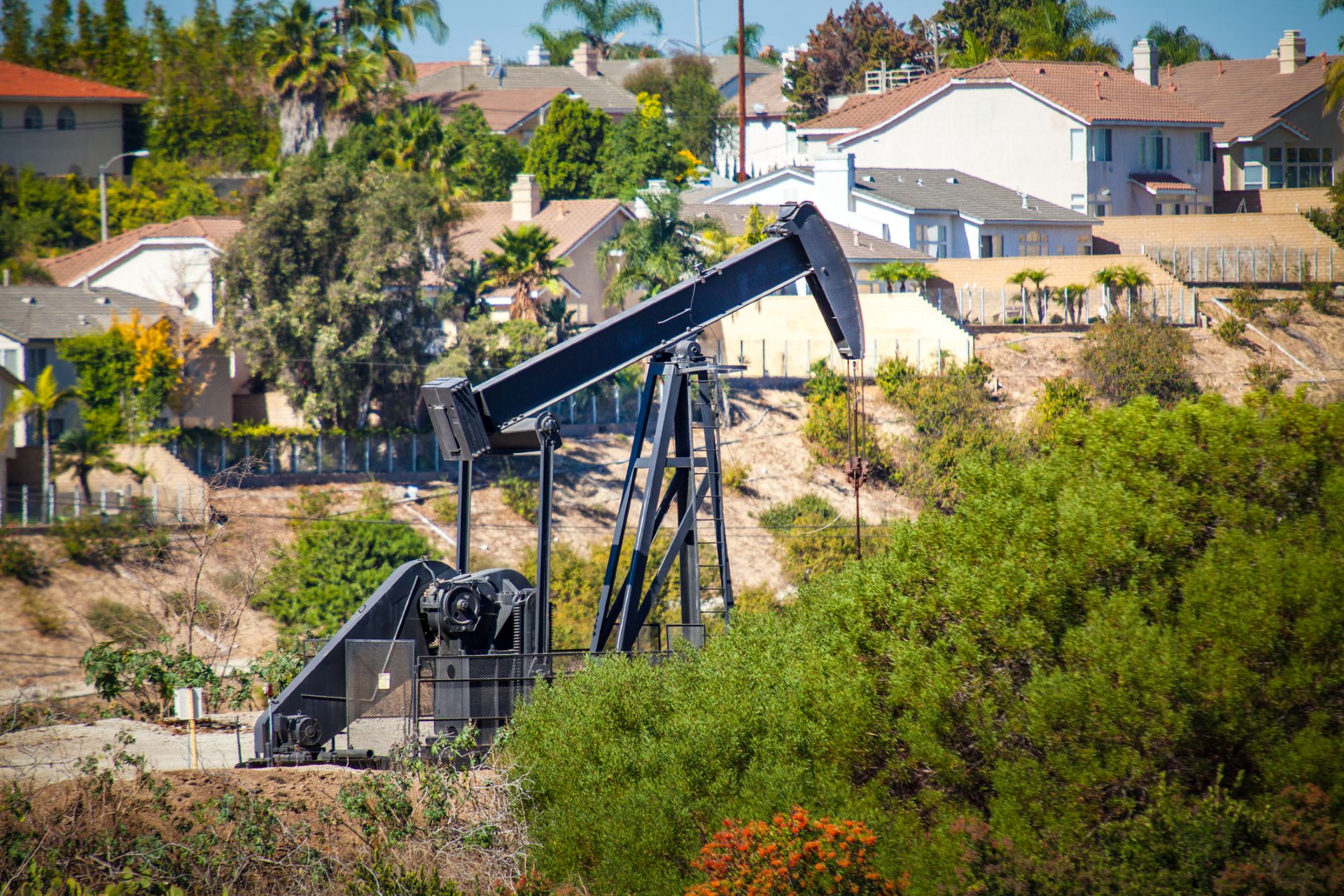
The Trump Administration's Department of Justice recently sued California to try to block a new state law designed to prevent oil wells from being drilled dangerously close to schools, homes, hospitals, and other sensitive locations where people live, work, and gather.
The federal lawsuit comes after the failure of an expensive effort by the oil and gas industry to try to revoke the California law by voter referendum, which was rejected in a wave of community pushback and public outcry. The law, which was approved by state lawmakers in 2022, prohibits new drilling within 3,200 feet (one kilometer, or about 0.6 miles) from houses and public gathering places.
U.S. Attorney General Pamela Bondi said the lawsuit was filed to advance President Trump’s Executive Order, “Protecting American Energy from State Overreach,” which aims to stop the enforcement of state laws that unreasonably burden domestic energy development. Bondi called the California law “radical,” and falsely asserted that it threatens America’s energy independence.
Kayla Karimi, an attorney with the Center on Race, Poverty & the Environment located in Kern County, CA, the site of many of the state’s oilfields, said California’s setback law is critical to protect communities from the harms associated with living near the pollution and noise from oil and gas wells.
“Oil and gas operations release toxins known to cause respiratory issues, pregnancy complications, cardiovascular issues, and cancer,” said Karimi. “Pushing for more oil is only temporarily prolonging a dying industry that is not only expediting harm to our climate but directly harming the health of our communities.”
About eight percent of Californians, or nearly three million people, live within one kilometer of an active oil well, the majority of whom are low-income and people of color. Under the California setback law, known as SB 1137, existing wells that fall within the new setback limits may continue to operate, but must closely monitor emissions and take action to reduce dust and limit noise and light pollution.
The Trump Administration’s lawsuit is the latest escalation in an ongoing dispute between California Governor Gavin Newsom and President Trump over California’s energy policies, with the state favoring clean energy and Trump pushing fossil fuels.
The Trump Administration wants to ramp up oil drilling off the California coastline, which has outraged many state officials. The administration also recently sued two Bay Area cities over energy efficiency policies that block natural gas infrastructure in new construction. And in January, the Trump administration released plans to open more than one million acres of public lands in California to oil and gas drilling and fracking.
Before the U.S. Justice Department stepped in, the oil industry attempted multiple times to kill the California setback bill, including a failed attempt to revoke it by referendum. After spending more than $20 million collecting signatures to get the measure on the November 2024 ballot, the industry then withdrew it, saying the measure had been mischaracterized by environmental groups.
Kassie Siegel, director of the Center for Biological Diversity’s Climate Law Institute, said Trump is doing everything he can to prop up the oil industry that donated mightily to his campaign.
“He’s targeting California because it’s a threat to his dirty-energy agenda,” she said. “Oil production emits a host of toxic pollutants like benzene that cause cancer, asthma, and heart issues. This pollution can even harm babies in their mother’s womb and cause birth defects. That’s why it’s so important that the state of California pull out all the stops to defend this law. “
Siegal said the Trump Administration intends to go after all kinds of health and environmental protections around the country that it doesn’t like, and that striking down California’s law would set a terrible precedent for other states.
Numerous scientific studies have documented the significant health risks posed by living in close proximity to oil operations. Air pollutants associated with extraction, including volatile organic compounds and particulate matter, can trigger breathing problems, heart attacks, headaches, and a higher risk of cancer. Other concerns grow from heavy truck traffic, noise, water contamination, and low birth weights for children born to mothers living with the stress of drilling sites nearby.
A 2023 study on cardiovascular health and proximity to urban oil drilling in Los Angeles suggested that living near urban oil drilling sites is associated with hypertension, or high blood pressure. Approximately one-third of the 10 million L.A. County residents live less than one mile from an active oil or gas extraction site, and over 500,000 residents live less than 400 meters away.
The federal lawsuit, filed in the U.S. District Court for the Eastern District of California, claims that SB 1137 is unconstitutional because it conflicts with the Mineral Leasing Act of 1920 and the Federal Land Policy and Management Act of 1976. The complaint asks for the state law to be paused and declared invalid.
While most active oil wells in California are on private and state lands, the federal Bureau of Land Management oversees more than 600 oil and gas leases within the state, with some 218 of them within the 3,200-foot buffer zones. This means that air pollution monitors should be installed to help warn and protect the public.
In 2024, California implemented a statewide ban on fracking. It joined a handful of states – along with Vermont, New York, Maryland and Washington – that have prohibited the underground injection of water mixed with chemicals into shale rock formation to extract oil and gas. Studies have shown that fracking increases risks for people living nearby for a wide array of ailments, including cancer, skin rashes, heart disease, and mental health problems.
California’s 3,200-foot buffer zone around new drilling sites is the most ambitious in the country. States including Colorado, Pennsylvania, Texas, and Wyoming have setback requirements of 1,000 feet or less and have not banned fracking.
Pennsylvania’s Environmental Quality Board is currently considering a petition to increase the state’s required no-drilling zone – or buffer – around homes, schools, water sources, and streams from fracking wells. The petition asks for buffer zones of 3,281 feet from any building and from any drinking water well, 750 feet from any surface water, and 5,280 feet from schools, hospitals and other buildings serving vulnerable populations. Pennsylvania currently has a 500-foot setback requirement for drilling sites from buildings – but it can be waived – and a 1,000-foot setback from water supply extraction points. Petitioners submitted dozens of peer-reviewed, independent studies to support their argument that these setbacks are woefully insufficient to protect public health and waterways from fracking pollution. If the increased buffer zones are approved, they would be Pennsylvania’s first statewide minimum setback distances based on public health information.