Massive gas-powered data center in Permian Basin is latest in string of Texas AI computing hubs

Everything’s bigger in Texas, including the data centers. Texas’s environmental agency recently approved the latest in a string of large gas-fired power plants to support the state’s burgeoning data center industrial complex. The GW Ranch Project, set to be constructed in Pecos County, West Texas, in the Permian Basin, could generate up to 7.65 gigawatts of electricity, making it the largest power project in the United States according to the developer, Pacifico Energy.
One gigawatt of electricity can power about 750,000 homes, so this single data center complex could power over five million homes, or a large American city. The facility has been permitted to release more than 12,000 tons of air pollutants per year, including soot, ammonia, carbon monoxide and volatile organic compounds. The complex could also release up to 33 million tons per year of greenhouse gases, equal to nearly a third of Belgium’s total annual greenhouse gas emissions.
According to the latest numbers from Oil and Gas Watch, as of February 10, 2026, there are 158 proposed projects to build or expand gas power plants in Texas, some of them for data centers. Based on publicly available permit documents, if constructed these projects could emit over 237 million tons of greenhouse gases every year, as much climate-warming pollution as 50 million gas-powered vehicles driving for a year.
Even as Trump Administration officials attempt to undo the EPA’s ability to regulate and monitor greenhouse gas emissions, they can’t erase the science or the reality. A team of 60 international scientists recently released a report saying that we are rapidly approaching greenhouse gas temperature thresholds and that “things aren’t just getting worse, they’re getting worse faster,” according to study co-author Zeke Hausfather of the climate monitoring group Berkeley Earth.
A recent report from Global Energy Monitor (GEM), a San Francisco–based nonprofit that tracks oil and gas developments, found that more than a third of new gas power demand in the last two years across the country is explicitly linked to data centers. According to the analysis, the U.S. nearly tripled the amount of gas-fired capacity in development in 2025, totaling almost 252 gigawatts, allowing it to surpass China as the world’s top gas developer.
Texas accounts for nearly a third of the planned gas power expansion in the U.S., according to the report, more than the next seven states combined. Nearly half of this capacity, 40 GW, is intended to directly power data centers, “reflecting the state’s eager appetite to meet energy-hungry tech demands,” states the Global Energy Monitor report.
Jenny Martos, project manager for GEM’s Global Oil and Gas Plant Tracker, said Big Tech is catching on to Texas' close proximity to gas supply and fast permitting process.
“The Pacifico GW Ranch project’s proximity to the Permian Basin is a clear example of developers building as close to the source as possible,” said Martos.
Only a few years ago, many industry experts believed a substantial portion of data center infrastructure would be powered by renewable sources of energy like wind and solar, with battery storage and grid connections helping to compensate for lulls created by intermittent dropoffs in wind or sunshine.
But the race to achieve results in artificial intelligence has upended that prediction. Claiming a need for speed, energy-hungry data center developers are rushing forward with their own independent infrastructure and powering it with gas. The Trump Administration has encouraged this shift by prioritizing fossil fuels over renewable energy, and realigned federal policies and incentives to match this preference.
In one symbolic example, last April an enormous gas-fired power plant was announced at the site of Pennsylvania’s largest coal plant, now shuttered, about an hour east of Pittsburgh, to power a massive data center complex with 4.5 gigawatts of power. The plant is permitted to emit over 17.5 million tons of greenhouse gases each year. Environmental groups are challenging the permit.
In Texas, Fermi America applied for 6 gigawatts of gas power in August for a data center complex near Amarillo that could also include nuclear power. A pending air permit for the gas power plant shows that it could emit nearly 24 million tons of greenhouse gases and over 5,000 tons of health-harming air pollutants each year.
Chevron is also getting in on the action, having announced plans in November to site its first gas-powered A.I. data center in West Texas. Starting at 2.5 gigawatts, it could expand to supply twice that much in the future.
Gabriel Collins, a researcher at Rice University’s Baker Institute for Public Policy in Houston, said that data center developers are looking for affordable and reliable energy to start with but that he wouldn’t be surprised to see complexes like GW Ranch expand to include a more diverse portfolio of energy sources.
“The Permian is a full-stack energy play,” Collins said. “It’s very sunny and the wind blows most of the time. There’s space for nuclear and even geothermal. And there’s plenty of room for battery farms. Data centers don’t come online in one day. As they incrementally build out, they make investment decisions based on the market.”
Collins said data center operators would prefer to connect to electricity grids, but with power sources already strained that is increasingly not an option. He said even in the remote Permian Basin, the grid is being strained by the increasing electrification of the oil industry.
“Everyone forgets that oil and gas extraction is energy intensive,” Collins said, adding that peak energy demand in the Permian oilfields can approach ten gigawatts, comparable to the power demand of the Houston metro area.
Texas’ industry-friendly legislature is using financial incentives to encourage power suppliers to invest in gas, and at times overlooking proper oversight in approving new projects. An Environmental Integrity Project report last June on Texas gas plants found that Texas has illegally rubber-stamped permits for the construction of at least three large power plants – and potentially others — without the stringent air pollution limits or public hearings required under the federal Clean Air Act.
The EIP report made the argument that Texas could choose a cleaner path to increase its electricity generation, including by subsidizing more solar and wind power and large-scale battery storage units, instead of using taxpayer dollars to support energy from fossil fuels.
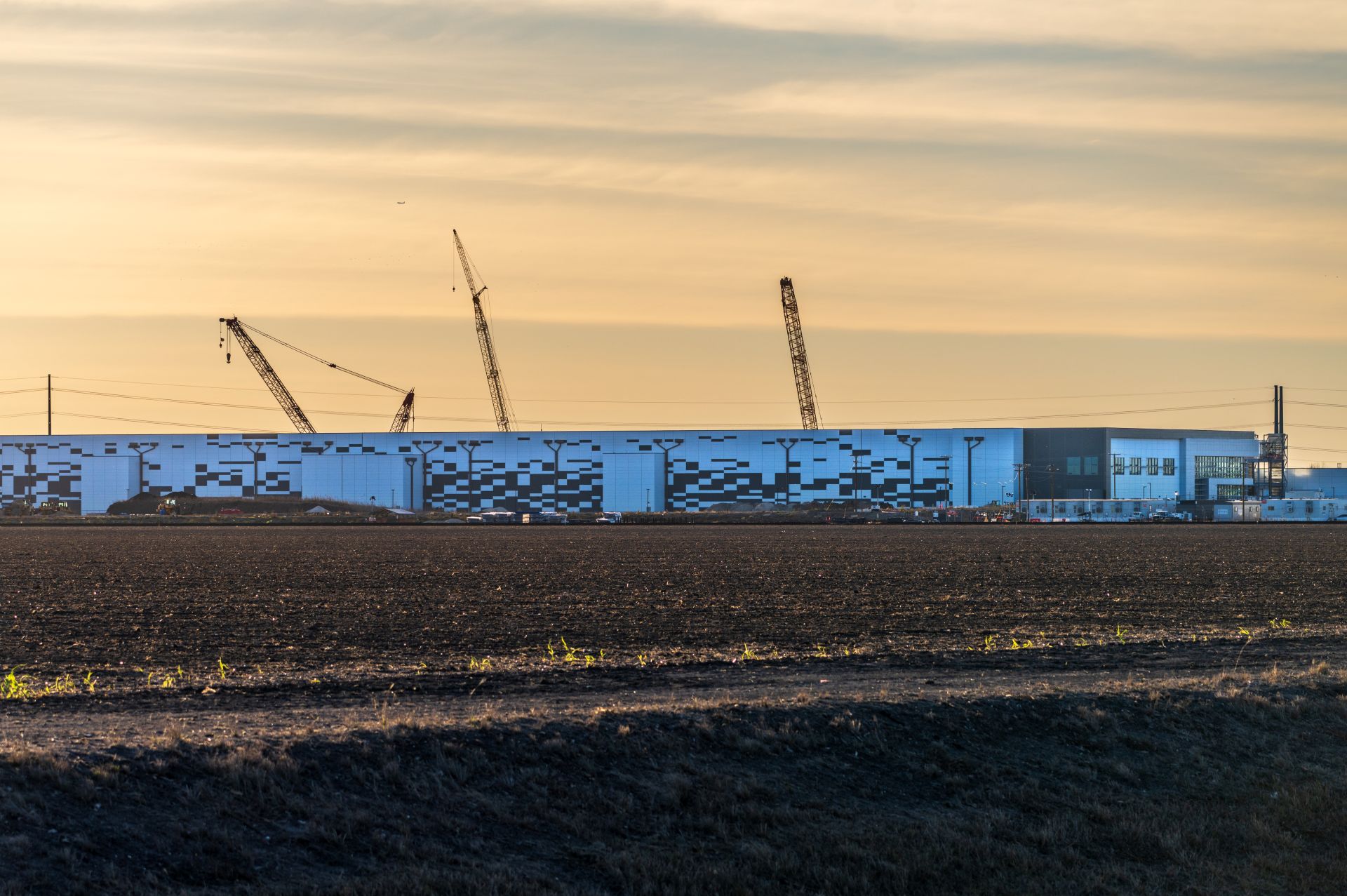
Lead photo: A data center under construction in Texas. Photo by iStockphoto.