Trump Administration proposes allowing companies to start building industrial plants without air permits

In a proposal rolled out to help companies planning data centers and power plants, the Trump Administration is proposing to let companies start building massive new industrial facilities before they receive an air pollution control permit.
Under the federal Clean Air Act, power plants and other potential sources of pollution must apply to state or federal environmental agencies and receive what is called a “preconstruction permit” before they roll in the cement mixers.
But on May 13, the administration proposed making it legal for companies to begin construction on new projects – including data centers, power plants, and other major manufacturing facilities like steel mills, chemical plants, and liquefied natural gas terminals – before they even receive permits that authorize the project.
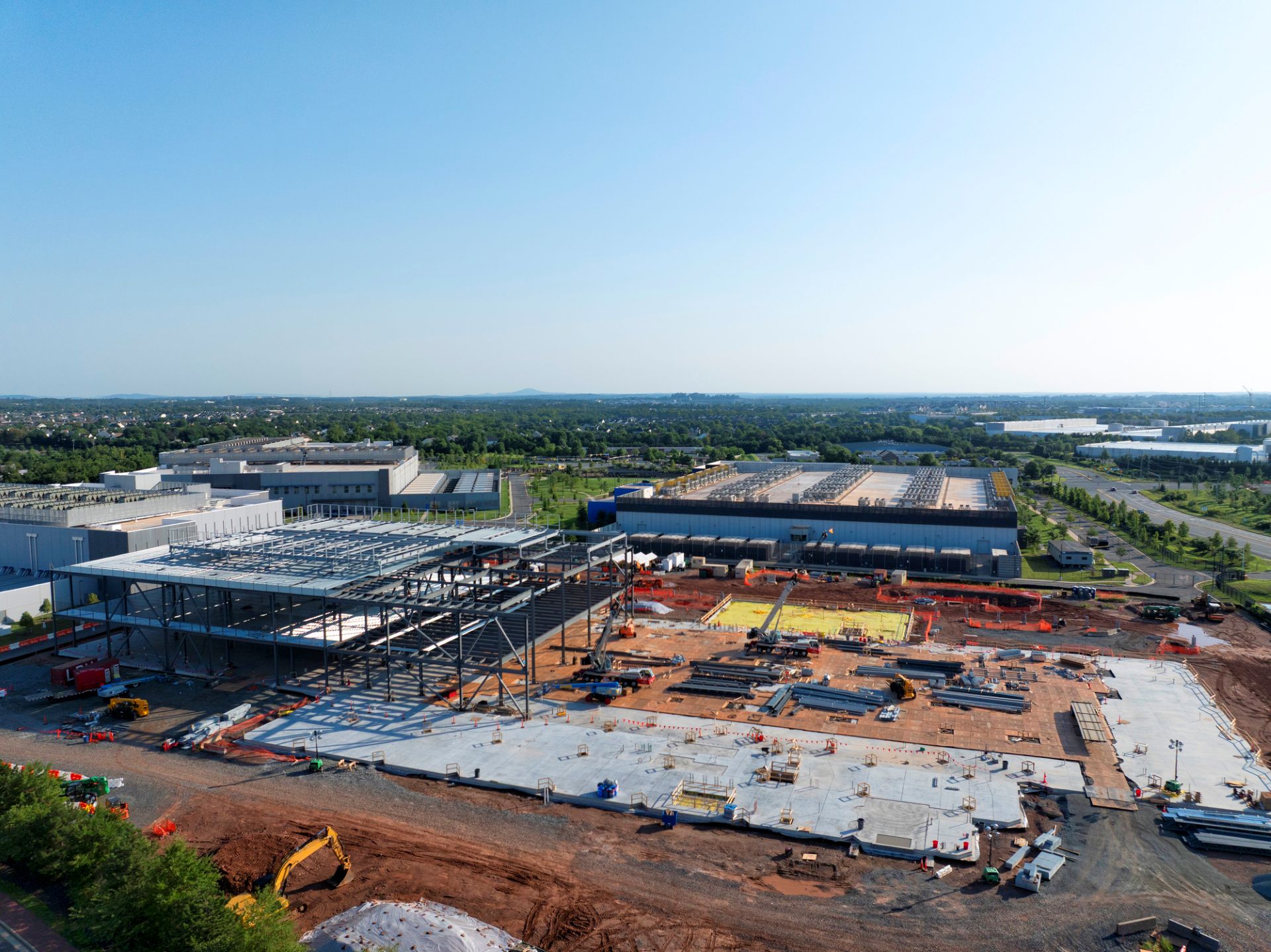
The proposal states that companies can begin construction on things like cement pads, buildings, pipes, and wiring before getting a permit, as long as those components do not emit pollution themselves and are not specifically configured to serve the equipment that does. The pollution-emitting equipment itself, and any piping or wiring that would serve it, would still require a permit before construction could begin.
The idea contradicts decades of Clean Air Act policy. The law requires companies to hold off on constructing a major new source of air pollution until environmental regulators finish their review, allow the public to weigh in, and make a final decision about whether to approve the project. To get around this requirement, the administration is inventing a new term – “pollutant emitting activities” – that does not appear in the 1970 law, said John Walke, federal clean air director and senior attorney at Natural Resources Defense Council (NRDC).
“For the first time in 50 years, [the EPA] is going to allow you to construct the stationary source, as long as you don’t start construction on ‘pollutant emitting activities,’” Walke said. “Congress could have written the law that way, but they did not.”
In a May 11 press release, the administration said the change would “support the development of Artificial Intelligence (AI) infrastructure and power generation.” The proposal comes as tech firms and land developers plan thousands of new data center projects across the country, many of them planned to be powered by natural gas-fired power plants or other fossil fuel generators that require air quality permits.
The proposal is the latest attempt by the Trump Administration to slash environmental regulations in the name of cutting costs for major corporations. Though the EPA said the move is meant to help the AI and energy sectors, other industries welcomed the change as well, including the National Association of Manufacturers, which called it a “win” for manufacturers.
But environment and public health advocates counter that allowing construction before the approval of a permit will increase pressure on regulators to issue permits. This is especially true for state environmental agencies, which issue the vast majority of Clean Air Act permits instead of the EPA, said David Baron, senior attorney at Earthjustice.
“The harm is that when you have a company that has spent millions of dollars on site construction, it becomes really politically difficult for the permitting agencies … to say no at that point,” Baron said.
In Republican-controlled states that emphasize cutting regulations, local officials “would be chomping at the bit to allow this rollback,” said Walke, with NRDC.
“EPA is ensuring kind of this race to the bottom, so that states like Texas, and some of the red states that would eagerly adopt this rollback, will now tout this as a deregulatory incentive to lead more of these data centers to come to their jurisdictions rather than jurisdictions that would oppose this rollback,” Walke said.
If finalized, the changes could apply to the hundreds of new natural gas-fired power plants currently planned across the U.S. that do not have final air permits yet.
The proposal would benefit companies like xAI, billionaire Elon Musk’s AI company, which sparked an environmental justice battle in Memphis, Tennessee, when it started up dozens of natural gas turbines without proper permits to run its massive supercomputer, Colossus. The company only sought air permits after being sued and called out by residents and environmental groups.
“I know first-hand that trying to get a company or facility to alter its pre-existing infrastructure is nearly impossible,” said Isabel González Whitaker, associate vice president with advocacy group Moms Clean Air Force, who lives in Memphis about 10 miles from the facility, in a video opposing the proposal.
“It’s a nightmare scenario for families like mine whose children have respiratory issues,” she continued. “This proposal is offensive to every mother and individual who cares about clean air for themselves and for children.”
Some of these new “hyperscale” data centers include on-site power plants that would be large enough to supply major U.S. cities with electricity while spewing more air and climate pollution than multiple coal-fired power plants.
Depending on timing, the Trump Administration proposal might benefit, for example, the Stratos Project, a data center and power complex larger than the surface area of Manhattan planned for northwest Utah by celebrity investor Kevin O’Leary, who appeared on the show “Shark Tank.”
Developers have not yet sought an air permit for power plants associated with the controversial facility. Still, hundreds of protestors resisting the data center due to its immense water and power needs packed a meeting of local officials last month. Six local residents joined with the progressive group Alliance for a Better Utah to sue Project Stratos developers last week.
If finalized, the proposed rule would also apply to petrochemical facilities, including plants that make plastic and the products needed to make it.
These facilities can emit large amounts of health-damaging air pollutants, such as soot and the ingredients of smog, which can cause lung damage and trigger asthma and heart attacks, and cancer-causing pollutants like benzene and formaldehyde.
Walke, the NRDC attorney, thinks the administration’s proposal, if finalized, will ultimately be struck down. “The proposal is going to be illegal, and we are going to identify all the ways that it is illegal,” he said.
EPA is accepting public comments on the proposed rule until June 29. Click here to submit a comment.