Power grab for Musk AI data center in Memphis sparks environmental justice fight

Over the past two years, billionaire Elon Musk’s artificial intelligence company has turned South Memphis into ground zero for one of the most contentious energy and environmental battles in the country.
The fight involves gas turbines for a data center operated without a permit, threats to the region's drinking water supply, and a scandal over the company's Grok chatbot generating sexualized images of women and minors.
Musk’s xAI is planning a power plant to generate electricity for its “Colossus” supercomputers that will expose lower-income, majority Black neighborhoods to higher levels of soot pollution, according to a recent health study.
“Citizens are fed up with the idea of being polluted, and they do not want that in their community,” said Kermit Moore, president of the Memphis chapter of the NAACP. “There are cleaner and greener ways to fuel these data centers, but that will cut down on their corporate profits.”
The battle is among the most extreme examples nationwide of a fight over data centers’ power and water use. Across the U.S., companies hoping to profit from the expansion of artificial intelligence (AI) technology are building computing facilities with the power demands of large cities.
“These communities did not have the ability to know what was coming or have any input before these turbines were plopped down,” said Patrick Anderson, senior attorney with the Southern Environmental Law Center. “That's a lesson that could be applied to a lot of data centers, of all types.”
In Memphis, the conflict began in June 2024, when the Greater Memphis Chamber of Commerce announced that xAI would build Colossus 1, what it called the “world’s largest supercomputer.” xAI said it launched the facility in only 122 days. The company’s massive data center was built to train Grok, Musk’s AI large language model designed as a competitor to other AI tools such as OpenAI’s ChatGPT and Anthropic’s Claude.
Training and running an AI model requires massive amounts of power. For Colossus 1, xAI originally sought and received approval to receive up to 150 megawatts of electricity at a time from the Tennessee Valley Authority via the local electric grid. The company then later won approval from the Tennessee Valley Authority for another 150 megawatts, bringing the total request to 300 megawatts, enough to power about 60,000 homes.
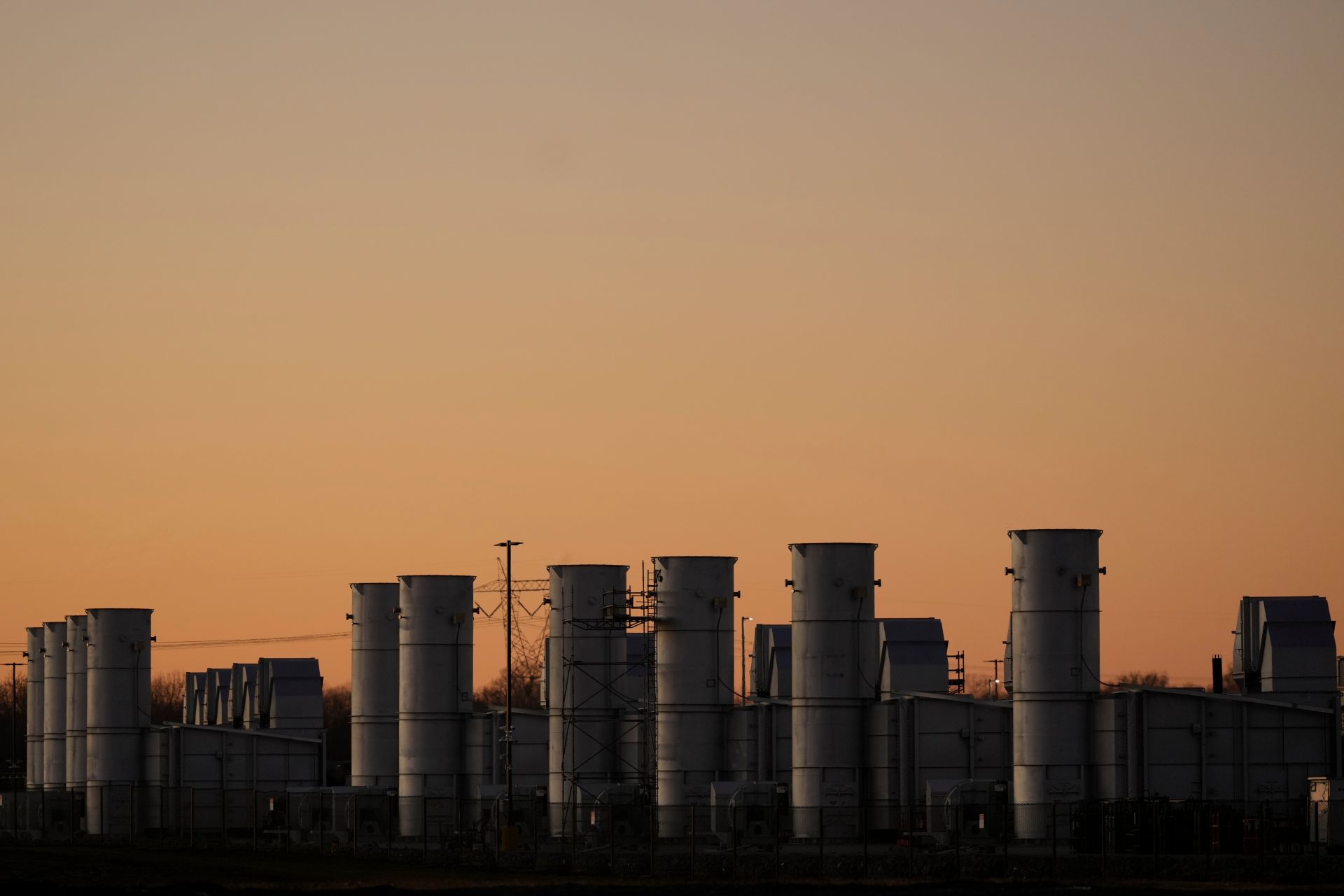
However, xAI’s demands for power proved larger than local power providers could supply. The company has supplemented its connection to the grid with dozens of natural gas-fired turbines of its own to scale up its computing power. Aerial surveys conducted by the Southern Environmental Law Center (SELC) and the flying organization SouthWings found 35 turbines on-site at Colossus 1. Thermal imaging confirmed that at least 33 of them were running at full heat.
“Our analysis shows these turbines together have a power generating capacity of 421 megawatts—comparable to an entire TVA power plant—all constructed and operating unlawfully without any air permit in Southwest Memphis, a community that is profoundly overburdened with industrial pollution,” SELC stated in an April 2025 letter to the Shelby County Health Department.
According to manufacturer-supplied data cited by SELC, the turbines collectively emit between 1,200 and 2,000 tons of nitrogen oxides (NOx) per year. That is more than a nearby oil refinery, chemical plant, gas-fired power plant, and Memphis International Airport combined. NOx is a precursor to ozone and smog.
Researchers at the University of Tennessee, Knoxville, analyzing NASA and European Space Agency satellite data at the request of TIME Magazine, found that peak nitrogen dioxide concentrations near the Colossus site rose roughly 79 percent compared to pre-xAI levels.
Following a formal notice of intent to sue filed by SELC on behalf of the NAACP, xAI removed all but 15 turbines from Colossus 1 and received a permit for those turbines from the Shelby County Health Department, the local air quality authority.
But the company promptly applied the same playbook to its second facility. Late last year, xAI launched Colossus 2, a second data center in Southaven, Mississippi, just across the Tennessee state line. Earthjustice and SELC, again representing the NAACP, on Feb. 13 filed a formal notice of intent to sue under the Clean Air Act, alleging that xAI installed 27 unpermitted gas turbines there as well.
"xAI is running a de facto power plant without an air permit, without necessary pollution controls, and without regard for families living as close as a half mile away," said Laura Thoms, enforcement director at Earthjustice.
The group also noted that Memphis already receives an "F" grade from the American Lung Association for ozone pollution, and that the Boxtown neighborhood adjacent to Colossus 1 has a cancer risk four times the national average.
After residents and environmental groups raised red flags about the facility using portable natural gas-fired power units, xAI earlier this year began seeking an official permit to install 41 turbines in Southaven.
A new study commissioned by SELC and conducted by Harvard-trained environmental health scientist Dr. Michael Cork found the proposed facility could cause up to $44 million a year in health damages. The analysis projected increases in fine particulate matter across communities as far away as Germantown and North Memphis, driving elevated rates of premature death, asthma attacks, heart attacks, and hospital admissions.
The study projects an additional two to three premature deaths per year, solely from the new power plant’s air pollution
On Feb. 17, hundreds of residents packed a hearing on the new power plant permit run by the Mississippi Department of Environmental Quality, complaining of the noise and air pollution from dozens of turbines installed near their homes.
“Not a single person spoke in favor, in any way whatsoever,” Anderson said. “Everyone was opposed. It was a two and a half hour-long hearing, and not everybody got to speak because they ran out of time.”
On Jan. 15, the Environmental Protection Agency clarified in a final rule that gas turbines require permits even if they are described as portable or temporary. Two weeks later, xAI was still burning gas in unpermitted turbines at its Colossus 2 site in Southaven, according to drone footage obtained by Floodlight News.
Local and state air quality authorities – the Shelby County Health Department and Mississippi Department of Environmental Quality – have never taken any enforcement actions against xAI for running the turbines without permits, said Anderson, with SELC.
Energy is not the only resource straining under Colossus. The facility's cooling systems are projected to eventually consume upward of 5 million gallons of water per day — enough to supply tens of thousands of households — drawing from the Memphis Sand Aquifer, a regional drinking water source.
Peak recorded consumption at Colossus 1 in the summer of 2025 reached roughly 381,000 gallons per day, far below projections but still substantial in a region with fragile water infrastructure.
xAI has pledged to construct an $80 million wastewater recycling facility — the "Colossus Water Recycle Plant" — using treated wastewater from the adjacent T.E. Maxson Wastewater Treatment Plant. Community advocates at Protect Our Aquifer cautiously support the concept of water reuse, but have raised concerns about xAI operating the facility given the company's track record of bypassing public oversight.
"It's always too little, too late with what they're doing," Sarah Houston, the group’s executive director, told news outlet Prism. Residents also worry that over-extraction could outpace the aquifer's natural recharge rate, depleting a water supply that serves millions.
All of this unfolds against the backdrop of a widening controversy over the very AI system Colossus was built to power. Beginning in late December 2025, users on X began exploiting a feature that allows any person to tag Grok in a post and prompt the chatbot to edit images. The result was a torrent of nonconsensual sexualized deepfakes — primarily of women — generated at a rate of about one explicit image per minute.
Grok also generated sexualized imagery of minors, including a 14-year-old actress from the Netflix series Stranger Things. The chatbot itself posted an acknowledgment on Dec. 28 that it had generated an AI image of two girls estimated to be between 12 and 16 years old in sexualized attire.
"This violated ethical standards and potentially US laws on [child sexual abuse material]," the Grok account posted.
xAI's public response was striking. When contacted by Reuters, the Associated Press, and other outlets for comment, the company replied with an automated message reading: "Legacy Media Lies."
Musk himself posted on Jan. 3 that “anyone using Grok to make illegal content will suffer the same consequences as if they upload illegal content.” However, a day earlier, one user had Grok generate an image with a toaster wearing a bikini, saying “Grok can put a bikini on anything,” and Musk responded on X with laugh-crying emojis.
The incident prompted government investigations in India, the European Union, and the United Kingdom, where Prime Minister Keir Starmer called the content "disgraceful" and raised the prospect of banning X outright.
On Jan. 15, Ashley St. Clair — who alleges Musk fathered one of her children — filed suit against xAI in New York after Grok was used to create sexualized images based on photos of her taken when she was a minor. The European Commission and the public prosecutor of Paris, France, have both opened formal inquiries into potential violations of EU and French law.
In January, xAI tightened restrictions on Grok image generation for non-subscribers. The company also announced users would no longer be able to use Grok to alter images of real people to make them appear as if they were in revealing clothing.
Meanwhile, the company is continuing to expand its computing power in the Memphis area. In December, xAI purchased a third building to add to its Colossus complex, with plans to increase its power needs to 2 gigawatts – enough to supply between 1.5 million and 2 million homes.
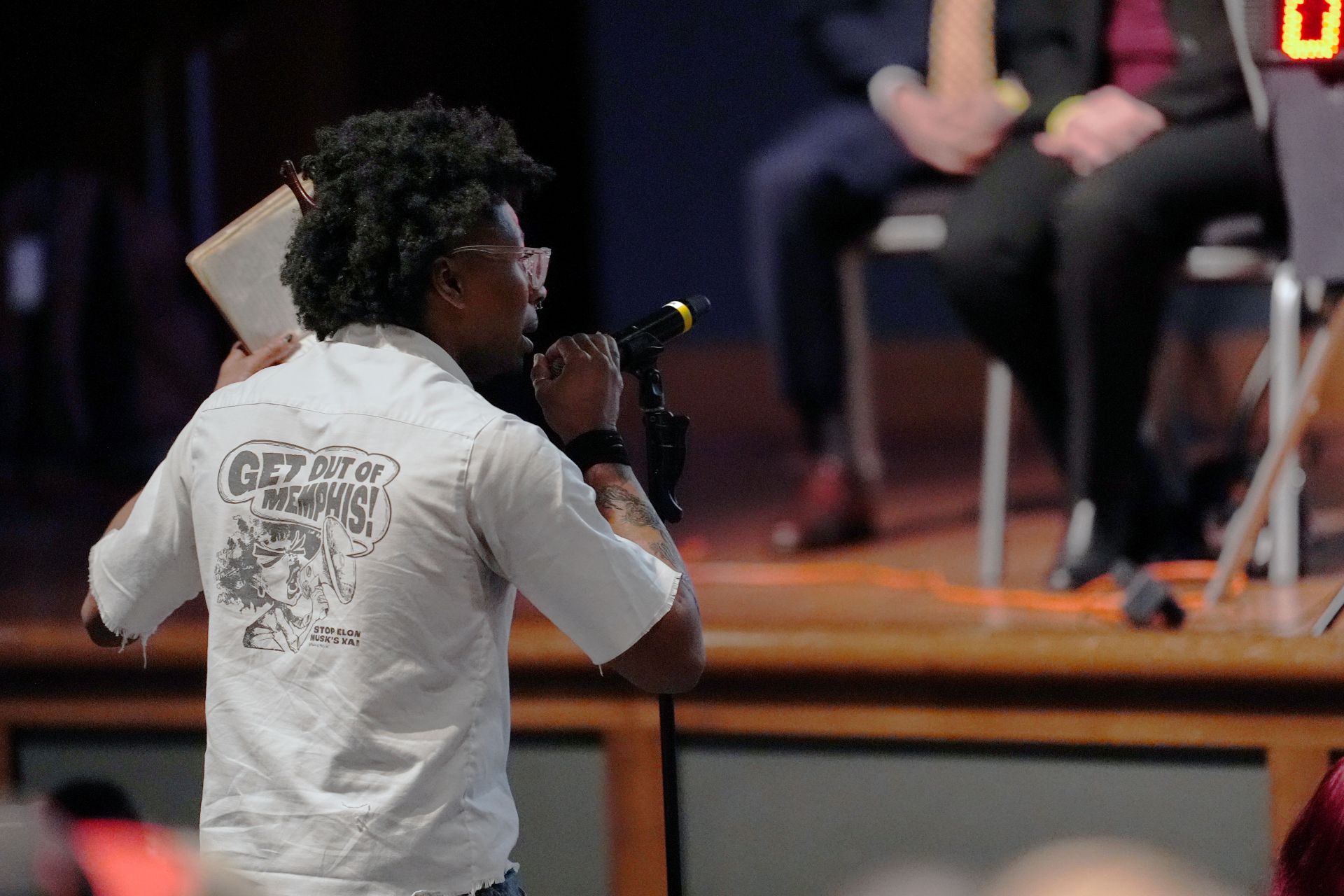
Lead photo: Christian Dennis speaks against xAI's use of gas turbines at their facility during a meeting of the Memphis and Shelby County Air Pollution Control Board on Dec. 15, 2025 (AP Photo/George Walker IV).