The Trump Administration wants to give Alaska oil and gas developers a free pass

Alaska oil development is poised to receive a major regulatory boost from President Donald Trump. According to several sources, the Interior Department is preparing a new categorical exclusion that would allow certain Arctic oil and gas development activities in Alaska to proceed without the usual project-specific environmental review.
This is the latest effort by the Trump Administration to expand oil and gas development across Alaska’s North Slope that began on his first day back in office in 2025, when he signed an executive order to unleash “Alaska’s extraordinary resource potential.”
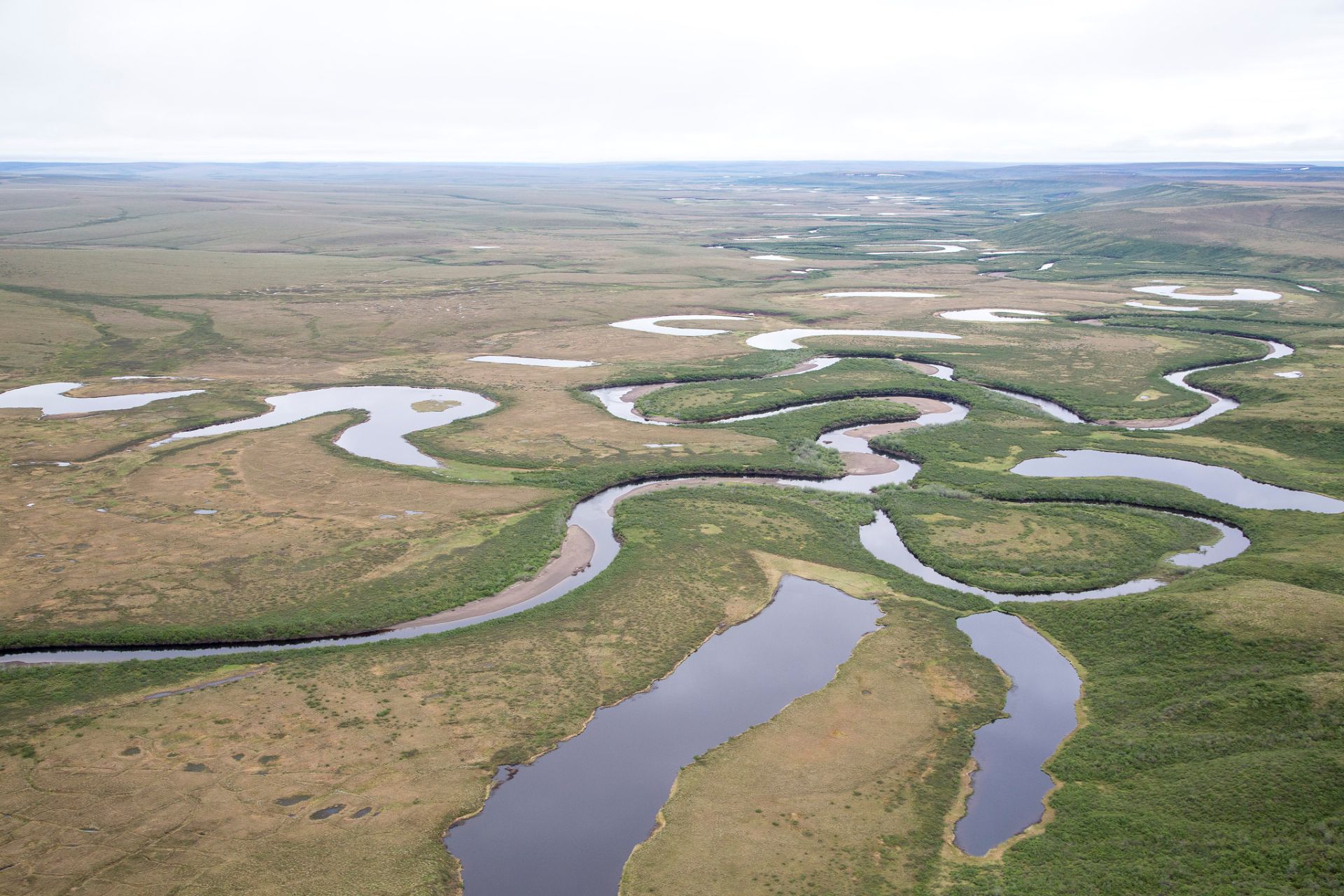
The streamlining effort, meant to reverse Biden-era protections and speed-up environmental reviews, specifically targets an Indiana-sized chunk of the state’s North Slope known as the National Petroleum Reserve-Alaska (NPRA). The 23-million-acre reserve is the largest parcel of land managed by the Interior Department. Several Iñupiat Indigenous communities live in villages located in or bordering the reserve, including the Utqiaġvik (formerly Barrow) and Nuiqsut.
“This administration is attempting to strip the public of their right to say no to drilling in the Western Arctic,” said Matt Jackson, Alaska senior manager for The Wilderness Society. “Americans’ freedom to enjoy and have a say in what happens on our public lands shouldn’t be sacrificed for oil company profits. It’s a shortsighted tradeoff that will permanently change the lands we hand down to future generations.”
According to the Interior Department, the updated rulemaking was requested by the Alaska Oil and Gas Association, a trade group that promotes drilling in the state. The group petitioned the Bureau of Land Management to streamline construction and operation permits for sites that meet predefined criteria.
The rule, which reports indicate was effectively written by the Alaska Oil and Gas Association, would create a generic or blanket environmental impact statement that could be used for winter seismic surveys, exploratory drilling, and associated rights-of-way for pipelines, roads, and other infrastructure to move forward. This would be quicker, easier, and less thorough without a project-specific Environmental Assessment or Environmental Impact Statement required under the National Environmental Policy Act (NEPA).
This type of categorical exclusion should require public input as part of the development process. But in April 2025, the Council on Environmental Quality gave up its responsibility to oversee NEPA in response to Trump’s Executive Order, “Unleashing American Energy.” Because of this, the 30-day public comment period is no longer required. Categorical exclusions are meant to be used when agency actions are expected to have little or no significant environmental impact, such as in cases where it has already been determined that there is little risk to natural resources, not exploration activities that clearly have significant impacts, such as building ice roads, ice pads, and running 15-ton seismic thumper trucks in grids over the tundra.
“The Department of Interior describes this as creating a more efficient and predictable permitting process, but the practical effect is less site-specific scrutiny before industrial activity begins,” said Krystal Lapp, Interim Executive Director at the Northern Alaska Environmental Center. “This is particularly concerning because cumulative impacts have been at the center of National Petroleum Reserve-Alaska management debates for decades.”
Lapp said the categorical exclusion is one part of a much broader shift towards Arctic drilling under Trump. The administration is making leasing, exploration, and drilling all easier while making it harder for communities, tribes, and scientists to voice concerns.
For years, multinational oil companies eschewed bidding on leases in the National Petroleum Reserve-Alaska, opting to invest in other parts of the world with more readily accessible resources. But recent large oil discoveries in the reserve, along with shifting geopolitical considerations, led to a large lease sale in March of 2026. This sale resulted in 187 tracts, or 25 percent of acreage offered, being purchased by ConocoPhillips, ExxonMobil, Shell, and other companies, which made $163 million in winning bids.
Mike Scott, senior campaign representative for Sierra Club’s Our Wild Alaska, said he thinks the lease sale was popular because companies saw an opportunity to nab up a lot of potential resources for very little cost during a period of upheaval due to the war in Iran and chaotic oil markets.
“I don't expect the lease sale in March to result in a huge influx in drilling in the near term,” said Scott. “I do expect that if we see high oil prices and geopolitical instability, it might become more interesting, but for now it's still very expensive and difficult to develop in the area.”
In 2017, the U.S. Geological Survey estimated that the reserve contains almost nine billion barrels of oil and 25 trillion cubic feet of natural gas, a more than sixfold increase from the previous USGS estimates for the area.
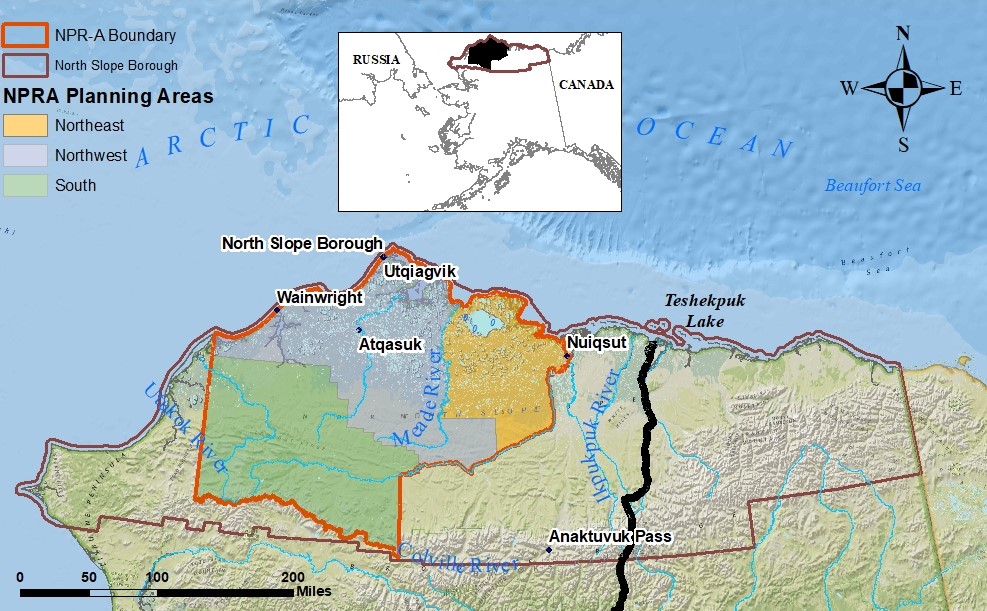
While many of the leases have been issued, a federal lawsuit filed by nearby Indigenous residents has tied up 17 of ExxonMobil’s 24 tracts, with a federal judge blocking the Bureau of Land Management from issuing the leases to the company. In 2024, the Biden administration struck a deal with Native communities around Teshekpuk Lake, the third largest lake in the state, that barred oil leasing in the region unless it was approved by a representative group. The deal was partially meant to mollify those opposed to the Willow Project, a massive, multi-billion-dollar oil drilling venture in the reserve approved by the Biden administration in March 2023.
When the Trump administration reneged on the agreement, the Native communities sued. In an early victory, a federal judge restored the deal, meaning that the recently auctioned leases that fall within the Teshekpuk Lake Conservation Right-of-Way cannot be granted without the group’s consent.
Jeremy Lieb, an attorney in Earthjustice’s Alaska office, said the 2026 Western Arctic lease sale offered tracts in ecologically sensitive areas, including around Teshekpuk Lake, which provides globally significant habitat for shorebirds and water birds and is critically important for the Teshekpuk Caribou Herd, among many other species.
“As the Bureau of Land Management has recognized for most of the last four decades, this area’s ecological and cultural values are too sensitive and important to allow oil development,” said Lieb. “And, of course, an already overheating world cannot afford to develop and burn new sources of fossil fuels. The fact that oil companies want the oil does not make it an acceptable use of public land.”
The National Petroleum Reserve-Alaska is located on the far western edge of existing oil infrastructure in the North Slope, and didn’t produce any oil at all until around ten years ago. The 1976 Naval Petroleum Reserves Production Act directed the authorities to protect the reserve’s wildlife and environmental and scenic value.
The “Big Beautiful Bill” signed by President Trump in July 2025 legally mandates that the Secretary of the Interior hold at least five lease sales of at least four million acres each every other year over the next 10 years in the National Petroleum Reserve-Alaska.
A recent editorial in Legis 1, a congressional intelligence platform, argues that the convergence of this statutory mandate, regulatory rollbacks, and record-breaking lease revenues is locking in a decade of intensive oil and gas activity in the reserve.
“Unlike prior policy shifts that could be reversed by subsequent administrations, the reconciliation act's leasing requirements bind future secretaries of the Interior regardless of political affiliation,” reads the editorial. “The reserve's future now hinges less on administrative discretion and more on how quickly companies can move from leases to production, and whether ongoing legal challenges can slow that pace.”
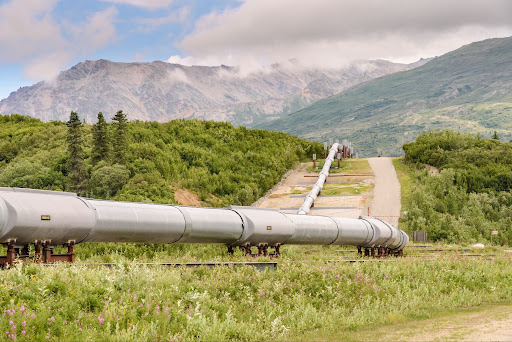
According to Oil & Gas Watch, there are currently 19 oil and gas projects proposed across Alaska. Many of them are along the Alaska Nikiski LNG Pipeline that is planned to run from Prudhoe Bay in Alaska’s North Slope, but not within the National Petroleum Reserve-Alaska, more than 850-miles south past Anchorage.
Lead photo: Northeast National Petroleum Reserve in Alaska. Photo by Bob Wick (BLM).