Trump Administration proposes weakening pollution rules for the chemical plastics ‘recycling’ industry

Buried in a proposal mainly focused on burning debris from natural disasters, the Trump Administration is proposing to weaken pollution control rules for companies that extract chemicals from used plastic under the guise of “recycling.”
Chemical recycling plants use a high-heat, energy-intensive process known as pyrolysis to mix plastics with chemicals and produce a product similar to crude oil but more toxic that can be burned or used in manufacturing. Sometimes referred to as “advanced recycling” plants, these facilities differ from conventional recycling, which mechanically breaks down waste plastics.
If the proposal were implemented, pyrolysis units – which heat plastics waste at up to 1000 degrees fahrenheit – would no longer be categorized as incinerators under the Clean Air Act and would therefore not be required to meet limits for cancer-causing air pollution like dioxins and cadmium, neurotoxins like lead and mercury, and other conventional air pollutants including nitrogen oxides, sulfur dioxide, and particulate matter. The current regulations, which define pyrolysis units as incinerators, have been in place for more than 30 years.
Rachel Fullmer, a Policy Advocate for the Natural Resources Defense Council, said EPA’s removal of pyrolysis from the Clean Air Act’s standards for incinerators would amount to “a blank check for industry to emit unlimited amounts of highly toxic, dangerous air pollution” that “will result in increased toxic air pollution in communities nationwide.”
Fullmer said the proposed change would make such facilities easier to site and cheaper to operate, so communities would likely end up with more of them – along with their toxic emissions, hazardous waste, and explosion dangers.
“Pyrolysis facilities create a lock-in effect for virgin fossil fuels since pyrolysis oil must be diluted by 80 to 95 percent with virgin fossil fuels before it can be used,” said Fullmer. “It also mostly creates fuels, not new plastic, and is therefore not recycling but rather plastic waste incineration by another name.”
The American Chemical Council, an industry group, applauded the administration's proposal, saying it was a “key step toward improving recycling and spurring innovation in the United States.”
But the Trump Administration’s EPA has downplayed the change and provided little information to raise public awareness about the proposal.
In an April 24 op-ed in The Hill supporting the exemption, EPA Administrator Lee Zeldin praised plastic as an “indispensable driver of manufacturing and economic growth” and asserted that “advanced recycling” techniques had been stymied by dated and burdensome regulations.
Maria Doa, Senior Director for Chemicals Policy at the Environmental Defense Fund, said Zeldin's promises to “get out of the way” of these facilities creates a troubling reality that public health is being traded for the profit of polluters.
“Strong, health-protective regulations exist for these facilities for good reasons,” said Doa. “Deregulating these facilities will open the floodgates for additional investment into this false solution, sending more polluting facilities into vulnerable communities that bear all the health costs,” she said.
In July 2025, the Trump EPA withdrew a proposed Biden Administration rule that would have paused industry efforts to reuse pyrolysis oils as fuel until the agency could review the health risks of toxic chemicals in the oils. According to the Environmental Defense Fund, because it is nearly impossible to make fuels from these oils that are free from toxic chemicals, the proposed rule had an immediate chilling effect on industry investment in “advanced recycling.” That chill has thawed since the Trump withdrawal of the Biden-era rules.
On June 18, more than 50 lawmakers, including Senator Jeff Merkley, Democrat of Oregon, sent a letter to Zeldin urging him to reverse course on weakening regulations for pyrolysis and “prioritize solutions to plastic waste that reduce reliance on single-use plastic and move towards a circular economy through reductions in plastics production and improved mechanical recycling.”
“Technologies that worsen the climate crisis, perpetuate a reliance on single-use plastics, and adversely impact vulnerable communities cannot be viewed as viable solutions moving forward,” states the letter.
Across the U.S., 10 chemical recycling plants have been built or expanded since 2012, while another 49 are currently proposed, permitted, or under construction, according to public records and data compiled in the Oil & Gas Watch database. Altogether, these facilities have the potential to emit 2.3 million tons of greenhouse gases per year, roughly equating to 480,000 gasoline-powered passenger vehicles driven for one year, as well as hazardous air pollution.
A March 2025 NRDC analysis found that 80 percent of current and proposed chemical recycling facilities use pyrolysis, “so it is the primary technology the industry is pushing to greenwash plastic waste.” The analysis shows that between 2021 and 2024, three pyrolysis facilities processing plastic waste generated more than 2 million pounds of hazardous waste.
Many of the proposed chemical recycling plants face community pushback. In 2024, residents of Point Township, Pennsylvania, successfully opposed plans to build a chemical recycling facility that would have extracted benzene, toluene, and xylene out of plastic waste through chemical treatment. Encina, the company developing the project, announced that it was canceling its plan after a local council voted to deny its request to withdraw 2.9 million gallons of water a day from the Susquehanna River and discharge contaminated wastewater back into the Chesapeake Bay’s biggest tributary.
More recently, on May 28, in Ohio, the Freepoint pyrolysis incinerator notified the Ohio Environmental Protection Agency that it would suspend its advanced recycling operations at its facility east of Columbus after the state agency issued five violation notices and was actively pursuing enforcement orders to address violations at the facility.
Rita O'Connell, National Plastics Organizer with Beyond Plastics, said the proposed change to the Clean Air Act would remove regulatory mechanisms communities can use to shut down dangerous and polluting facilities, such as was the case in Freepoint.
She said in Freepoint, local residents were able to keep the pressure on Ohio EPA to “pursue regulation related to repeated air permit violations, including multiple incidences of black smoke pouring from the stack, until they were forced to shut down after just 18 fraught months in operation.”
She said pyrolysis and other forms of chemical recycling are taking up an outsized amount of time in policy and regulatory conversations instead of real solutions to the plastic waste problem. O’Connell said this is “time we could be using to design, subsidize, and support real solutions like passing extended producer responsibility laws, establishing of reuse and refill systems, and banning wasteful and harmful plastics.”
State lawmakers in New York recently attempted to pass legislation that would reduce plastic waste and also remove chemical recycling from being classified as an acceptable form of recycling. The bill failed to get a vote in the state assembly, where it looked likely to pass, after being subjected to a sustained industry lobbying push.
In California, Attorney General Rob Bonta is embroiled in a legal battle with ExxonMobil for calling the company’s plastics recycling programs a scam and suing the petrochemical giant in 2024. Bonta claimed that the company was “engaging in a decades-long campaign of deception that caused and exacerbated the global plastics pollution crisis.” In return, ExxonMobil sued Bonta for defamation, a claim that is still pending in court.
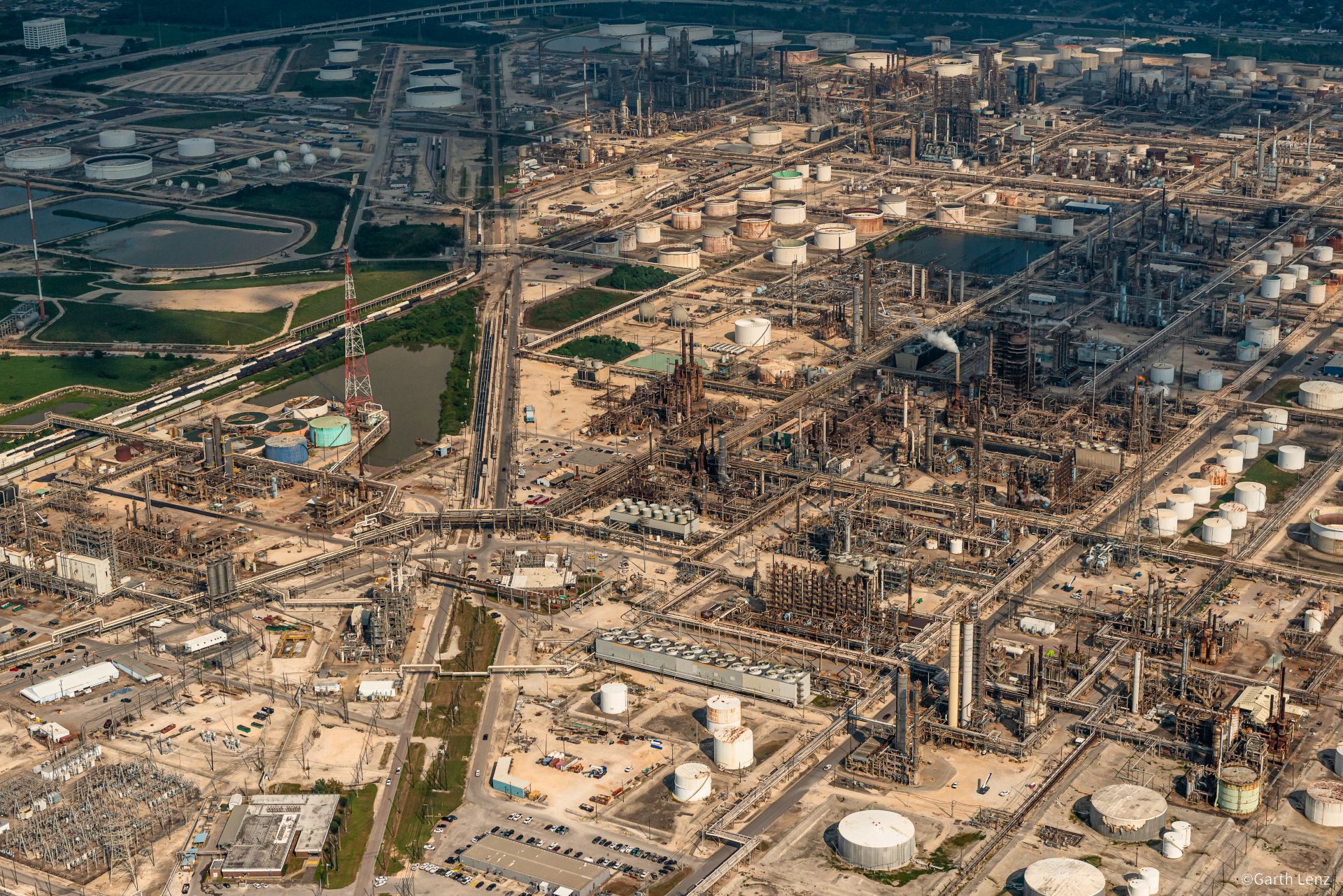
Lead photo: ExxonMobil's refinery and chemical complex in Baytown, Texas, which includes pyrolysis units. Photo by Garth Lenz / Flight SouthWings.