Virginia, a magnet for data centers, is hit with environmental lawsuit after approving large new gas power plant

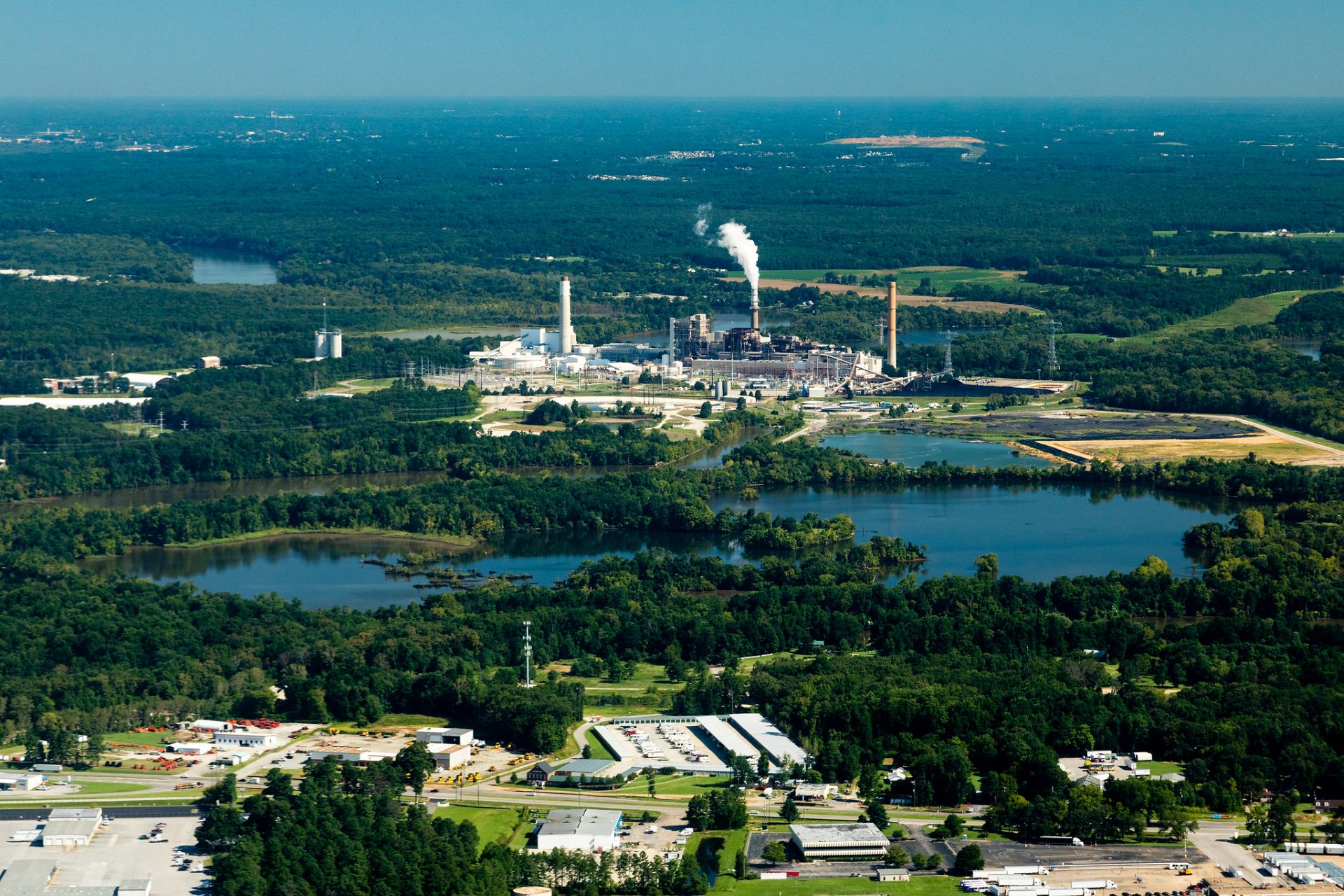
In a state experiencing a rise in electricity demand because of a boom in data centers, Virginia’s Dominion Energy is planning to build a 944-megawatt gas-fired power plant at the site of a former coal plant in Chesterfield, just south of Richmond.
Environmental groups are pushing back in court, arguing that the project violates 2020 state laws requiring renewable energy and environmental justice.
In the background looms artificial intelligence. Virginia has nearly 600 data centers – more than any other state – prompting the Commonwealth’s economic development agency to brag that Virginia is the “world’s largest data center market.”
But all that artificial intelligence demands an enormous amount of electricity. It also contributes to rising consumer electricity rates, especially during the heat of summer and the cold of winter, when air conditioners or electric heaters are working overtime and competing with data centers. To help supply more juice during these peak periods, Dominion Energy is proposing to build the $1.5 billion Chesterfield Energy Reliability Center near the James River.
The Virginia State Corporation Commission approved the project in November. But the Southern Environmental Law Center (SELC) and local partners are now suing the Virginia Department of Environmental Quality in Richmond Circuit Court over the air permit the agency issued for the gas plant. SELC is representing Appalachian Voices, Mothers Out Front and the Chesterfield County Branch of the NAACP.
The allies argue that the gas-fired power plant would violate 2020 state laws that set clean energy targets for Virginia and prohibit projects that would worsen environmental injustice by overburdening communities of color with air pollution.
Rachel James, a staff attorney with SELC, said both the manner in which Virginia conducted the permit approval process and the substance of the permit itself violate the law. “Virgina law does not provide for the Virginia Department of Environmental Quality to abandon requirements of state law in the face of energy demand increases,” she said.
“In the past three years, residents have gotten to experience the cessation of coal plant pollution,” said James, referring to the coal plant that operated on the Chesterfield site for nearly 80 years before closing in 2023. “Communities near the plant and beyond do not want more air pollution when there are cleaner alternatives to providing electricity to Dominion’s customers.”
Coal ash generated from Dominion’s coal plant also continues to contaminate the ground water at the site with no clear plan for cleanup.
A petition for appeal that SELC submitted to the state asserts violations of the 2020 Virginia Environmental Justice Act, which aims to reduce disproportionate environmental and health impacts to fenceline communities that have endured decades of fossil fuel pollution. If heard by the state Supreme Court, the case would be the first appeal under the new law.
“The state’s Environmental Justice Act is meant to be followed and directs agencies and regulators on how to properly assess requests such as this one from Dominion,” James said. “It’s not just a box to be checked, but in this case, even that wasn’t attempted.”
The groups are also appealing the Commonwealth’s approval on the basis that the plant would violate the 2020 Virginia Clean Economy Act. This law seeks to decarbonize Virginia’s electricity grid and retire nearly all gas and coal plants by 2045, unless there’s a threat to power supply reliability.
In testimony with the Virginia State Corporation Commission in summer 2025 in support of the gas plant, Dominion argued that computer modeling showed a risk to the reliability of the state’s electric grid unless additional dependable generation is built. Wind or solar units are not considered dependable (or “dispatchable,” using the industry jargon) under the Virginia Clean Economy Act because they cannot always be activated, for example, when the wind dies or clouds block the sun.
According to the SELC, progress towards decarbonization in Virginia is being challenged by rising electricity demand driven by data center development, with utilities like Dominion seizing on data center growth to try to build as many gas-fired power plants as they can.
SELC argues that Virginia needs more industrial-scale batteries added to the electricity grid during this time of uncertain growth in electricity demand. This is because batteries leverage existing resources, giving Virginia time to better understand data center needs and take full advantage of alternative energy technologies.
Virginia legislators appear to agree, at least in part, having unanimously passed a bill on March 2 that would require Dominion and the state’s other major utility, Appalachian Power Co., to regularly assess how efficiently the electric grid is being used and to avoid expensive and under-used infrastructure upgrades. When Democratic Gov. Abigail Spanberger signs the bill into law, Virginia will become the first state with a law attempting to quantify and reduce waste on the electric grid. The bill calls for the State Corporation Commission to work with the state’s two major utilities, and to give special attention to energy storage resources, such as batteries, among other technological options.
Virginia has become America’s hotspot for the construction of data centers because of the Commonwealth’s unmatched fiber connectivity, affordable electricity, proximity to demand, and business friendly environment, according to the state’s economic development agency.
A recent report from the Electric Power Research Institute found that data centers could consume 41 percent to 59 percent of Virginia’s electricity by 2030, up from 25 percent today.
In her testimony to the Virginia State Corporation Commission in opposition to the Chesterfield gas plant, Sierra Club witness Devi Glick, from Synapse Energy Economics, accused Dominion of failing to evaluate alternatives beyond just building the gas plant or not. In her own modeling, she found that an energy portfolio without the Chesterfield gas plant could have similar, if not better, reliability compared to a system with the plant.
“I found that Dominion’s economic analysis was insufficient to support its application because the company did not look at a single optimized portfolio of solar, battery storage, and increased energy efficiency to replace CERC,” wrote Glick, using the acronym for the Chesterfield Energy Reliability Center. “In my economic analysis, I modeled two alternative portfolios that are compliant with the company’s energy efficiency requirements and replace some or all of CERC with incremental quantities of solar and battery storage. I found only marginal cost differences relative to the portfolio with CERC.”
Steve Haner, a senior fellow for Environment and Energy Policy, said the common complaint by those in opposition “is that Dominion started with the assumption that it wanted to build a gas-fired plant and worked to reach that conclusion.”
Northern Virginia has been referred to as “data center alley,” and Dominion Energy Virginia was one of the first major U.S. utilities to face a surge in electricity demand from the rapid rise of A.I. computing. In a recent earnings update, Dominion Energy said it has seen 20 percent annual growth in data center demand in Virginia over the past 10 years and projects similar expansion well into the future. To meet this continued growth, the utility has about 48.5 gigawatts of future data center capacity in various stages of contracting as of December 2025.
Lucas RF Henneman, an assistant professor of civil, environmental, and infrastructure engineering at George Mason University, wrote that utilities like Dominion face a crossroads: “Should they boldly commit to a cleaner future or fall back on proven but more polluting technology that disproportionately affects some communities more than others?”
In pushing ahead with a proposal to build the Chesterfield natural gas plant, he wrote that “Dominion is committing to a piece of infrastructure that may pollute the air of Chesterfield for many decades and will continue driving a warming climate through CO2 emissions.”
“There is an opportunity for Dominion to be more forward-looking and give greater consideration to renewable alternatives that do not emit air pollution or CO2—our health, equity, and climate deserve more,” he concluded.
Lead photo: Chesterfield Power Station in Chesterfield County, Virginia. Photo by the Chesapeake Bay Program.