Wave of gas plants for data centers threatens communities with pollution, costs, and water consumption


Over the past two years, trillionaire Elon Musk’s artificial intelligence company has turned South Memphis into ground zero for one of the most contentious energy and environmental showdowns in the country.
In lower-income, majority Black neighborhoods along the Tennessee-Mississippi state line, Musk’s xAI has been installing dozens of gas turbines to generate electricity for its “Colossus” data center supercomputers that will expose residents to higher levels of soot pollution, according to a recent health study.
In South Memphis, xAI built its supercomputer in a neighborhood called Boxtown, a community founded by formerly enslaved people who built homes out of wood salvaged from train cars in the years after the Civil War. Before Colossus, the area already hosted an oil refinery and a steel mill.
“It is a continuous battle for what we know is our human right,” said KeShaun Pearson, executive director of Memphis Communities Against Pollution. “I believe we have a human right to clean air, clean water, and a healthy environment.”
This is one of several examples illustrating local opposition to data center construction included in a recent report from the Environmental Integrity Project. The report, titled “The Power Behind AI,” found that at least 74 natural gas-fired power plants are planned across the U.S. to provide energy for the rapidly growing data center industry.
These proposed gas plants, which would be dedicated to serving data centers, are expected to release nearly 662 million tons per year of greenhouse gas pollution, the equivalent of 140 million cars and trucks driving for a year or the annual emissions from the entire nations of Australia or France. The plants could also release 159,142 tons a year of health-damaging air pollutants, including 44,281 tons of nitrogen oxides and 32,684 tons of fine particulate matter, according to the analysis.
The 74 plants included in the report are called “behind-the-meter” power plants because they are designed not to compete with local households and businesses on regional power grids. Many other power plants are being planned across the U.S. that will be connected to the power distribution grid and serve other consumers, along with data centers. These will likely have more direct effects on electricity prices for nearby residents. However, behind-the-meter plants compete with utilities and other industrial sites for the same natural gas and power-generating equipment, which results in rising prices for everyone.
While communities have the right to voice opposition to power plants in public hearings for major sources of pollution under the Clean Air Act, some companies building large gas power plants are taking shortcuts by applying for permits intended for much smaller sources of pollution. These standard permits have weaker pollution-control requirements and don’t provide an opportunity for the public to comment or participate in the permit review process, according to the report.
“While data centers may be needed to accommodate shifts in technology, the public has a right to transparency and accountability, clean air, and common-sense controls to protect water supplies, especially in areas already struggling with water shortages,” said Jen Duggan, Executive Director of the Environmental Integrity Project. “An industry of the future should not be chained to dirty fuels of the past and the air pollution from fossil fuels that cause real harm to communities.”
The report argues that power for data centers should come from clean energy sources like solar and wind power, combined with batteries. If some gas power is needed, the plants should use the strongest available pollution control systems and modern and efficient technologies that capture waste heat and recycle it. Companies should also be required to implement technologies that minimize water use for cooling and power generation, especially in drought-stricken parts of the country.
The Trump Administration in March 2026 announced a “Ratepayer Protection Pledge” asking technology companies to build their own power plants for their data centers or otherwise cover the costs of their energy use so it is not passed on to consumers. Experts are skeptical that the pledge, however, because it is nonbinding and lacks any enforcement mechanisms.
U.S. Sen. Bernie Sanders (I-VT) and Rep. Alexandria Ocasio-Cortez (D-NY) in March 2026 introduced legislation proposing a moratorium on all new data center construction nationwide until AI safeguards, including worker and environmental protections, are in place. At least nine states, including Vermont, Wisconsin, Minnesota, and South Carolina are considering legislation to slow, delay, or limit data center construction.
In late June, Virginia lawmakers passed a new energy consumption tax on data centers of $0.011 per kilowatt hour used per month. While the tax is expected to generate around $600 million of revenue each year, it doesn’t include any environmental standards to help limit pollution. The Virginia Department of Environmental Quality has also been directed to study the groundwater impacts of data centers that use millions of gallons of water each year and identify scarcity areas where water resources could run low.
The EIP report also highlights an immense Fermi America data center complex planned near Amarillo, Texas, that would have enough power generation capacity to power New York City. The 141 turbines in this complex, known as the “President Donald J. Trump Advanced Energy and Intelligence Campus,” could release 40 million tons per year of greenhouse gases – as much as eight million cars and trucks driving for a year – as well as nearly 10,000 tons per year of health-harming air pollutants, including soot and smog-forming nitrogen oxides.
Kendra Seawright, organizer with community group Panhandle 1st Coalition, said that people who work for large local employers in the area are worried about the fallout and potentially losing their jobs if they publicly opposing the Fermi America project, which has the backing of the political establishment.
“It's just sad to know that we are aware of how much pollution there is going to be,” said Seawright. “.... What is the point of winning the AI race if it costs the lives of the people you’re supposed to protect?”
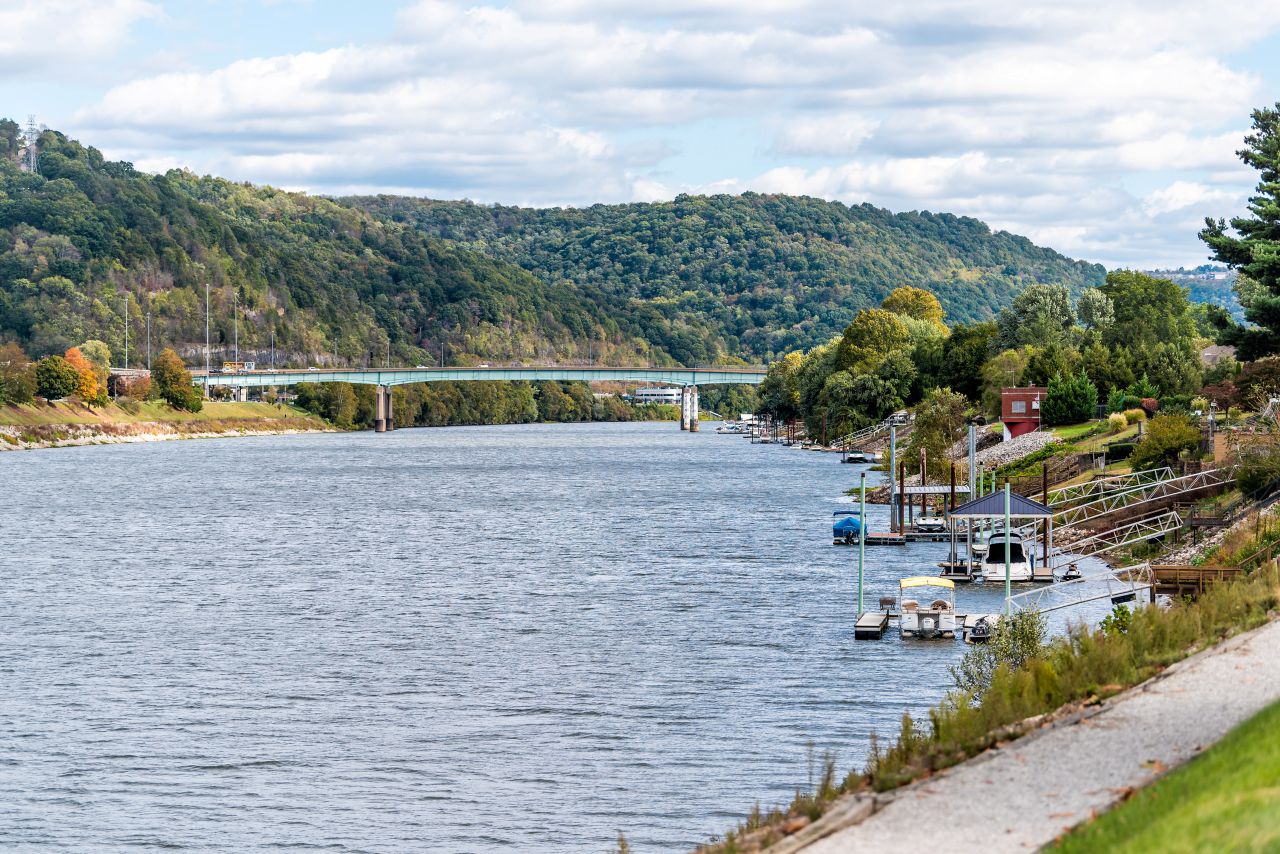
In Tucker County, West Virginia, local residents and elected officials are resisting plans for a natural gas-fired plant to power a data center proposed by a Virginia-based company called Fundamental Data.
The massive new facility and its power plant would change the landscape of a region that markets itself for its outdoor beauty and tourism because half of the land is made up of state parks, national forests, and wildlife refuges. The facility could release up to nearly 29,000 pounds of hazardous air pollution per year, according to permit documents examined for EIP’s report.
"Air pollutants from the proposed gas- and diesel-fired power plants are known to cause cancer, heart disease, and premature death, among many other risks,” said
Nikki Forrester, Director of Communications for Tucker United in West Virginia. “No data center project should compromise our health, clean air, water, or quality of life.”