In refinery town near Chicago, cancer concerns lead to calls for better air monitoring

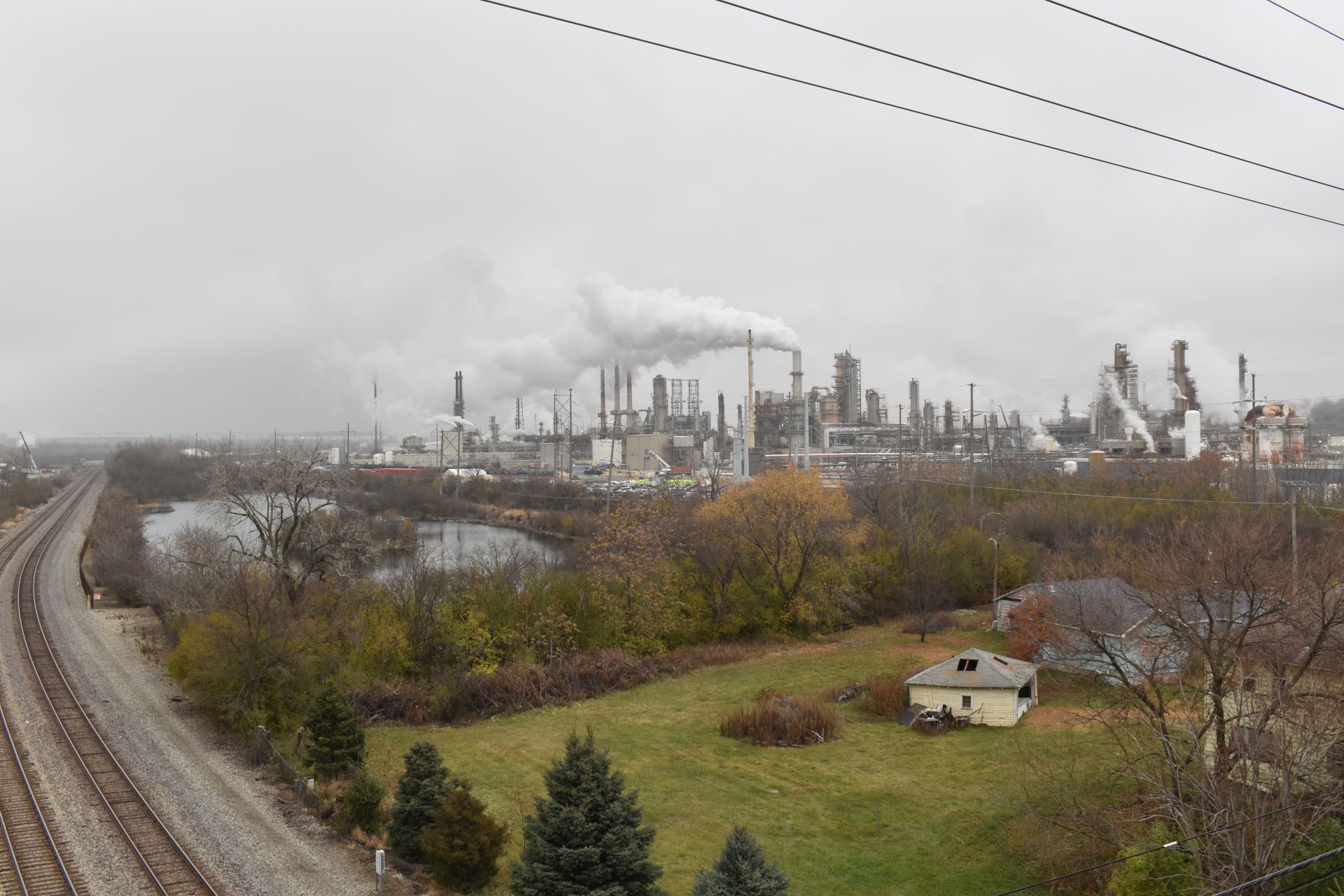
LEMONT, Illinois – Built at the bottom of a river valley surrounded by woods, the Citgo refinery feels a world apart from the subdivisions, strip malls, and quaint downtowns of this part of southwestern Chicagoland.
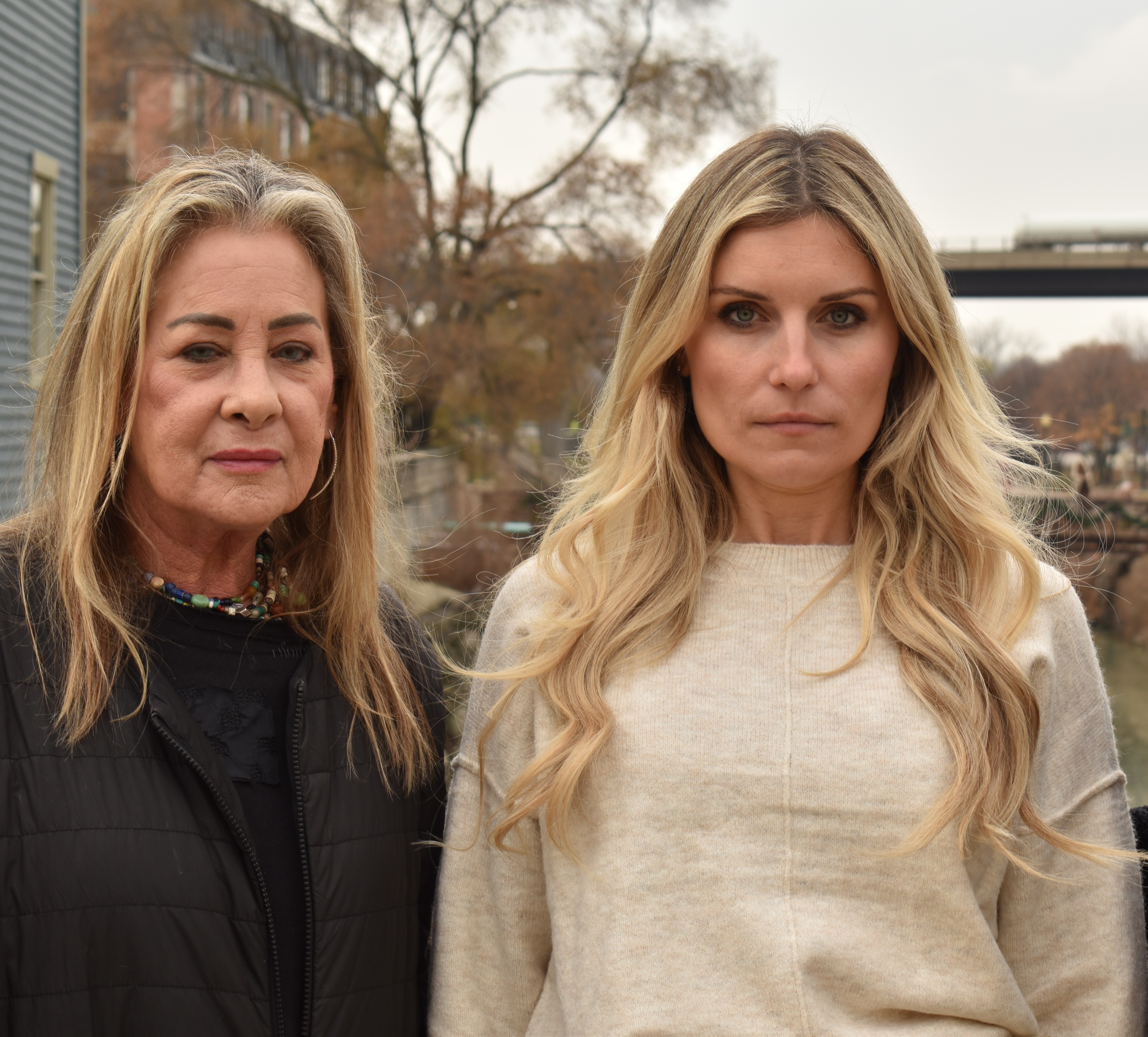
But when a group of residents began talking on Facebook about the mysterious illnesses affecting family members, they began to wonder if the refinery had something to do with it. Several are mothers of young children recently diagnosed with leukemia and other rare forms of cancer.
Z.P. is a local mother who asked that her full name not be used. She has been navigating treatments for her son since he was eight months old, when he was first diagnosed with a rare blood disease similar to cancer.
“This is not curiosity; this is survival,” Z.P. said at a recent public meeting on the facility’s air pollution. “My son was eight months old when he started chemo. He did not deserve this.”
Marina Bello, another local parent, is concerned about blood scans from her child that show unusually high levels of chemicals typically associated with petroleum products.
Both women are now part of a group of residents calling for more detailed information that tracks hazardous local air pollution, along with an alert system that can tell them when levels spike.
"We're doing this because no family should ever be blindsided by toxic air and water," Bello said. "If real-time monitoring saves even one child from suffering, then this fight is worth everything."
Industry data show that in May, benzene levels monitored at the refinery exceeded a federal minimal risk level for short-term health impacts including blood disorders. While the most recent annual levels of benzene, a carcinogen, at the Citgo refinery are below an EPA “action level” requiring a refinery operator to conduct a formal analysis of potential causes and take cleanup action, two monitors show long-term average concentrations that exceed California’s chronic health standard of 3 micrograms per cubic meter.
Some residents remain concerned after obtaining data from a benzene monitor at the facility that show concerningly high short-term spikes of benzene at levels that could potentially be a threat to public health. This has led the community to request real-time monitoring and alerts to let residents know exactly when air pollution spikes.
Such monitoring is required by law in California, home to 15 fuel-producing refineries. In California, most refineries conduct continuous monitoring of benzene and make it available in real time on web pages and through email alerts that community members can sign up for.
“We’re not looking to shut down Citgo,” said Lemont resident Amy Kelly. “We’re not looking to change the world. We’re looking for real-time monitoring and an alert system.”
In an email response to Oil & Gas Watch News, the refinery’s public affairs manager, Jen Hannon, did not address questions about the facility’s air monitoring.
Citgo’s Lemont Refinery has stood on the east bank of the Des Plains River for nearly a century, undergoing a major rebuild in the late 1960s. The refinery is one of three in the U.S. operated by Citgo, an oil company controlled by the government of Venezuela.
Following a lawsuit brought by the Environmental Integrity Project and allied organizations, U.S. oil refineries since 2018 have been required to monitor benzene levels at their fencelines and take steps to reduce emissions if net benzene concentrations exceed an “action level” over the course of one year.
Nationwide, the number of refineries exceeding that action level dropped from a high of 12 in 2020 to four in 2024. However, following President Donald Trump’s return to office in 2025, that decline has reversed, with seven refineries now exceeding the action level, according to industry data compiled by the Environmental Integrity Project. Citgo’s Lemont refinery nearly reached that “action level” of 9 micrograms per cubic meter of benzene in June 2023, though its annual net benzene levels have since decreased to 7.2 micrograms in June 2025 (the most recent available data).
But that does not mean that the air around the refinery is safe. One weakness in the EPA regulations that require monitoring for benzene around refineries is that they only impose a cleanup “action level” for annual average benzene levels, meaning that short-term spikes trigger no action – even if they put downwind communities at risk.
The Citgo refinery monitoring data show that the two-week average benzene concentration of at least one of the facility’s monitors spiked above a concentration high enough to pose potential short-term health risks in April and May 2023 and again in May 2025. That monitor showed an average reading of 53 micrograms per cubic meter for May 13 - 27, 2025. The same monitor’s average concentration was 36 micrograms per cubic meter from May 2-16, 2023. And from April 18 - May 2, 2023, a different monitor registered an average of 40 micrograms per cubic meter.
All were above the 29 micrograms per cubic meter that the U.S. Agency for Toxic Substances Disease Registry has set as the short-term (acute) minimal risk level for health impacts from benzene exposure. Those non-cancer health impacts can include blood disorders and related immune system dysfunction..
Residents are hoping that real-time monitoring and alerts from the refinery to local residents could help them avoid future health threats.
According to data from the Illinois Department of Public Health, the number of cases of leukemia and lymphoma rose more than 80 percent during a recent span of about a decade in the ZIP code (60439) that includes Lemont and parts of neighboring towns. The number of cases went from 41 during the period 2013-2017 to 74 during 2018-2022, the latest four-year period available.
Total cancer diagnoses – not just leukemia and lymphoma – are also on the rise. Public health data show they went from 723 cases from 2013-2017 in the Lemont zip code to 818 cases from 2018-2022, a 13 percent increase, according to the state health department. However, the population in the area also increased 6 percent during this period, from 23,177 people in 2013 to 24,670 in 2022, according to Census data.
It is difficult to connect any particular case of cancer to any specific source of air pollution.
But the human impact of these cancer statistics became clearer during a recent meeting of the Lemont Environmental Advisory Committee, a group of local volunteers organized by the town’s council. About 60 residents who packed a conference room at Lemont’s police station on Nov. 20 heard multiple residents talk about cancer deaths in their families.
Elizabeth “Ella” and Kazimierz “Casey” Panek lost their son, Lukas, to cancer four years ago at age 14. He was first diagnosed with a form of leukemia at age four. After undergoing treatment, cancer resurfaced in his brain years later, his mother said.
He only lived a little over a year after the second diagnosis. His mother said she always suspected an environmental cause, because cancer is all but nonexistent on both sides of the family.
“How do you prove all this?” Ella Panek said in a phone interview ahead of the meeting. “I will state my concerns, but I have no proof. … Whether they know it’s true or not, nobody would admit it.”
Ramute Strauka, a Lemont resident for 26 years, lost her husband to cancer six years ago. She said she often smells “strange, sharp, and distinct odors” when the wind is blowing from the refinery.
“We can stay silent to maintain the high prices of Lemont homes and the reputation of an attractive place to live, or we can speak loudly and honestly about our air pollution problems,” Strauka told the crowd.
At the meeting, Brian Reinke, the committee’s chairperson, described to the crowd what available data show about Citgo’s benzene emissions, pointing out that the data are “not real-time or even close to it.”
“There’s just too much of a delay,” Reinke said of the existing benzene monitoring data.
From 2017 to 2019, Citgo was required to post air pollution data to its website more frequently under a special agreement with federal regulators. The EPA had cited the company in 2009 and 2011 for violating the terms of an earlier 2005 consent decree requiring pollution reductions at the company’s six U.S. refineries.
In 2016, Citgo and its parent company agreed to spend $42 million installing equipment to reduce its emissions of multiple forms of air pollution and pay $2.2 million in fines to the federal and state governments.
As a part of the same settlement, the company also committed to monitor its emissions of benzene, hexane, and hydrogen sulfide and post them on its website, but it stopped posting these values in July 2019 after fulfilling the requirements of its consent decree.
At the meeting, Citgo public affairs manager Jen Hannon invited attendees to a series of three meetings the company plans to host in December and January to discuss air pollution data. At these meetings “experts will be on hand to answer any questions and provide clarity and understanding of facts,” Hannon said. She added that the company will limit attendance at each meeting to 35 people “due to meeting space and to better facilitate the discussions.”
Hannon then left the room before residents could speak or ask her questions during a public comment period. Her abrupt departure upset several people in the crowd.
“We didn’t even talk about anything yet, and she’s leaving already?” Casey Panek asked the people in the room. “My son died when he was 14 years old, and I don’t appreciate the smile on her face.”
Lead photos: Citgo's Lemont Refinery in Illinois in November 2025. Photos by Brendan Gibbons / Oil & Gas Watch News.