Trump Administration gives pipeline companies a new way to sidestep safety rules

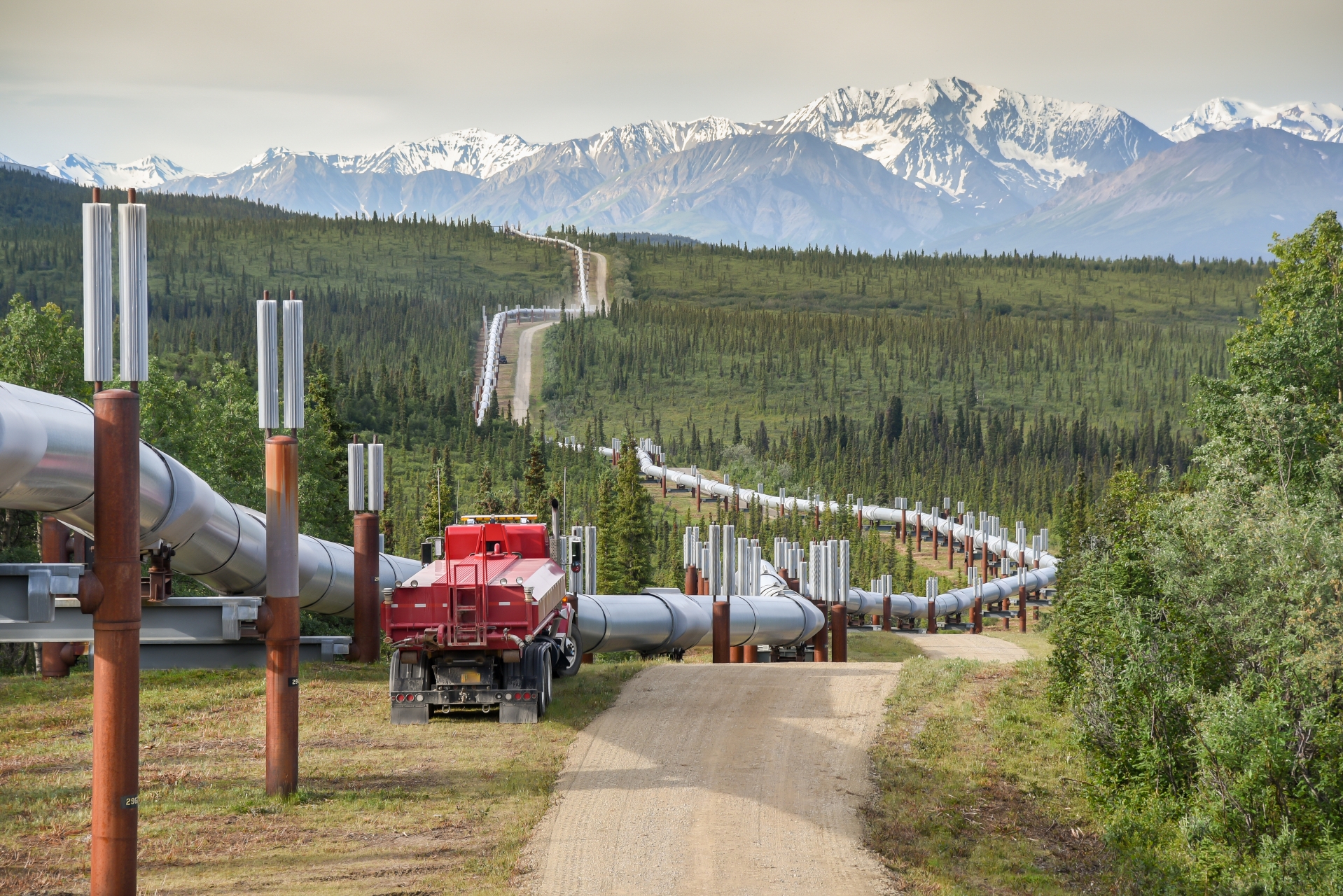
As companies plan a massive expansion of fossil fuel pipelines across the U.S., the Trump Administration is making it easier for operators to avoid following pipeline safety regulations.
On Jan. 12, the Pipeline and Hazardous Materials Safety Administration issued a policy directive stating that the agency would “refrain from taking any enforcement action” against pipeline companies that ask for and receive waivers from the Trump Administration to avoid safety rules.
The directive gives pipeline companies 45 days after building or upgrading pipelines to apply for a “special permit” to avoid enforcement if they sidestep safety rules during construction.
Though the administration currently lets companies get certain waivers before beginning a project, they can now apply for a special permit that “allows them to immediately just stop following the regulations,” said Bill Caram, executive director of nonprofit Pipeline Safety Trust.
The directive comes amid the biggest U.S. pipeline expansion since 2008, with pipeline companies planning on spending $50 billion to add 8,800 miles of new pipeline, according to energy analysts with Wood Mackenzie. Many of these projects are driven by a wave of new data center projects planned by tech firms racing to build artificial intelligence technology, along with more liquified natural gas terminals to export U.S. gas abroad.
The administration’s new waiver option would apply to major new pipeline projects in the Northeast, along the West Coast, and in Alaska. These include the Northeast Supply Enhancement Project, consisting of 37 miles of new natural gas pipeline that would carry gas from Pennsylvania to New York City, crossing under parts of New York/New Jersey Harbor.
It would also likely apply to the Constitution Pipeline, a 125-mile pipeline planned to move gas from Pennsylvania to markets in New York and New England. After struggling to obtain permits from regulators, pipeline company Williams recently revived the project, despite years of opposition from landowners and local environmental groups.
The directive cites Trump’s January 2025 executive order declaring a national energy “emergency.” The pipeline directive states that companies can apply for waivers from pipeline safety regulations if they can show that following the rules would increase energy prices, reduce fuel supplies, or impair “the integrity and expansion of the nation’s energy infrastructure.”
But cutting corners on pipeline safety risks spills, leaks, and explosions that can shut down pipelines and cause energy shortages, said Jim Walsh, policy director for Food and Water Watch.
“When pipelines become less safe, that creates disruptions,” Walsh said. “Lack of enforcement here may actually lend itself to making energy supply concerns worse because of ruptures.”
The directive is also based on a dubious premise – that the U.S. has an energy emergency. In fact, U.S. oil and natural gas production and exports have soared to record highs, and in 2018 America surpassed Saudi Arabia as the largest oil producer in the world. Prices for gasoline and diesel have also declined over the past year. The U.S. Energy Information Administration expects natural gas prices to fall slightly next year before rising in 2027, with most of that price increase attributed to more natural gas exports rather than supply constraints.
The U.S. pipeline network is the world’s largest, transporting natural gas, oil, hazardous liquids, and other materials. Total pipeline mileage adds up to about 3 million miles (compare that to about 4 million miles of public roads in the U.S.).
Many of these pipelines operate safely, but failures can be catastrophic and deadly. One of the most severe disasters in recent history happened in September 2010, when a natural gas transmission line ruptured and exploded in San Bruno, California, killing eight people, injuring dozens, and destroying 38 homes while damaging another 70.
Investigators determined that the pipeline’s owner, Pacific Gas and Electric, had implemented poor quality control when relocating the pipeline in the 1950s, allowing a poorly-welded section of pipe that failed years later. State and federal regulators had exempted existing pipelines from safety standards that would have required the company to detect and repair the section of pipe where the leak emerged, according to Pipeline Safety Trust.
In August 2021, a natural gas transmission pipeline in Coolidge, Arizona, burst and ignited a pillar of flame that killed a father and daughter and seriously burned another person. Investigators later determined that the company used the wrong coating that contributed to the pipeline’s corrosion and cracking.
Pipe corrosion also led to the failure of an oil pipeline in Santa Barbara County, California, in May 2015, with 100,000 gallons of crude oil spilling onto Refugio Beach. The oil coated birds and other wildlife and shut down local beaches and fisheries for weeks.
A company called Sable Offshore has been working to reactivate that pipeline and three off-shore oil platforms, called the Santa Ynez Unit. Sable restarted production last year, on the tenth anniversary of the spill.
Linda Krop, chief counsel with the Environmental Defense Center in Santa Barbara, is representing local environmental groups as they work to ensure the pipeline is held to proper safety standards.The company had received a waiver from the California Fire Marshal's Office in 2024 that allowed it to avoid using safety measures meant to prevent the pipeline from corroding.
But those waivers from the Fire Marshal came with a requirement that the company complete a slew of other repairs on the pipeline. Instead of completing those requirements, the company applied to the Trump Administration to take over jurisdiction of the project In December, the administration gave Sable a permit to restart segments of the pipeline under an “emergency special permit” with waivers from safety regulations.
The Environmental Defense Center and other groups sued the administration for taking over jurisdiction of the pipeline and rushing to approve the permit. And late last month, the California Attorney General also sued the Trump Administration, saying that the administration had illegally asserted jurisdiction over the pipelines.
“California has seen first-hand the devastating environmental and public health impacts of coastal oil spills — yet the Trump Administration will stop at nothing to evade state regulation which protects against these very disasters,” Attorney General Rob Bonta said.
Krop said the Trump Administration’s Jan. 12 directive to allow companies to apply to avoid enforcement adds to their concerns about the federal pipeline safety agency being in charge of the pipeline.
“To waive a safety standard requires real thorough review, and by doing these things on an emergency basis and letting the pipeline companies defer maintenance, it just adds fuel to the flames,” Krop said.
Overall, the rates of spills, explosions, and other pipeline disasters in the U.S. have remained “frustratingly flat” over the past two decades, said Bill Caram of Pipeline Safety Trust. For gas transmission pipelines, there was a steady decline in the rate of incidents per 1,000 miles of pipe from the 1940s through the 2000s. But then that trend reversed itself in the next decade, with a 60 percent increase in incidents from the 2000s to the 2010s, according to the group’s analysis of federal data. That rate has only decreased slightly, by 12 percent, from the 2010s to the 2020s.
Federal legislation that would require more safety measures for pipelines is stalled in Congress. The most recent version, the PIPES Act of 2025, was working its way through committees in the U.S. House in September, with a Senate version introduced in October. Progress on both versions, however, has since ground to a halt.
Jim Walsh, with Food and Water Watch, said: “If the administration is going to take an approach to regulations that companies decide what’s enforced … then at some level they’re saying that our laws don’t matter and Congress doesn’t matter.”