U.S. quadruples production of natural gas liquids, the main ingredient in plastic

What do natural gas and barbecue have in common? Both fall into two broad categories – wet versus dry.
Much of the focus on the U.S.’s natural gas boom has been on what is called “dry” natural gas. This is consumer-grade natural gas, mainly made up of methane, which is used for home heating, cooking, and electricity generation. The U.S. became the world’s top producer of dry natural gas in 2009 and the largest exporter since 2023.
However, over the past two decades, the U.S. has also seen a dramatic growth in production of lesser-known “wet” varieties of natural gas. “Wet” gas is methane mixed with hydrocarbon liquids such as ethane and propane that are collectively known as natural gas liquids. Natural gas liquid (NGL) production has more than quadrupled in the U.S. from 1.7 million barrels in 2005 to 7.5 million barrels per day in 2025, a 338 percent increase, according to a fact sheet on NGLs compiled by the Environmental Integrity Project.
Propane can be used to heat homes and cook food, but ethane is mostly used to make plastics and petrochemicals.
The U.S. has long been the largest NGL producer in the world, producing four times more than the second-largest producer, Saudi Arabia, according to the American Petroleum Institute. The U.S. accounted for nearly half of the world’s NGL production in 2024.
More NGL production has led to a wave of new projects to separate, purify, transport, store, and export these chemicals. As of July 31, 17 NGL processing, storage, export, and pipeline projects were under construction across the U.S. and nine more were proposed, according to public records on file in the Oil & Gas Watch database. Four are on hold or have an unknown status.
Over 80 percent of these projects are in Texas, driven largely by the Permian Basin oil and gas region of West Texas and New Mexico, where nearly half of the natural gas production consists of “wet” gas containing NGLs.
This growing supply has led to more infrastructure to move, store, and export NGLs. Eight pipeline projects – at least 769 miles of new pipelines – could add approximately 1.6 million barrels per day of capacity. Seven NGL storage projects would add at least 34 million barrels of capacity. And seven export terminal projects, three new and four expansions, could increase export capacity by over 1.4 million barrels per day, a 47 percent increase over 2025 if all are built.
Natural gas liquids are among the first molecules studied in beginner college organic chemistry courses. They consist of a chain of carbon atoms surrounded by hydrogen atoms, forming a class of chemicals known as “alkanes,” whose names all end in “-ane.”
Methane, the key component of “dry” natural gas used to heat homes and generate electricity, is the simplest alkane. It’s just one carbon atom with four hydrogen atoms. Methane is also a potent greenhouse gas, responsible for about a third of the global warming being experienced today, according to the UN Environment Programme.
Methane and its cousins store vast amounts of energy in their carbon bonds. Lighting them on fire releases that energy as heat and flame. Burning these molecules also produces carbon dioxide – another important greenhouse gas contributing to climate change – as well as health-harming nitrogen oxides and fine particles that form smog and soot.
Most of the growth in the U.S. NGL sector has been in the next two alkanes on the list: ethane (two carbons) and propane (three carbons). Ethane is a key ingredient in plastics and other chemicals and is the main reason for the growth in U.S. NGL export growth. It is also sometimes mixed with methane and used as fuel. Propane is largely used as a household heating and cooking fuel, especially in countries where in-home service of consumer-grade natural gas to households is rare. Manufacturers also use propane as a raw component of plastics and other chemicals.
Because NGLs come out of the ground alongside oil and gas, the rise in NGL production is tied to an overall boom in U.S. oil and gas drilling. Since the advancement of hydraulic fracturing and horizontal drilling techniques about two decades ago, the U.S. has become the world’s top producer of crude oil and natural gas. The amount of natural gas – and natural gas liquids – flowing up alongside oil from U.S. wells has been surging. According to the U.S. Energy Information Administration, so-called “associated” gas, which contains natural gas liquids, from oil wells accounted for nearly 37 percent of all U.S. gas production as of 2023.
With so much “wet” gas flowing up alongside oil in the Permian Basin, in particular, NGL production is expected to continue rising, experts say.
“Even if Permian crude oil production were to stagnate over the next few years — a big if — the region’s output of NGLs would likely increase by half, from the current 3.2 [million cubic feet per day] to about 4.8 [million cubic feet per day] in 2030,” RBN Energy senior writer and editor Housley Carr wrote in a January 2026 blog post.
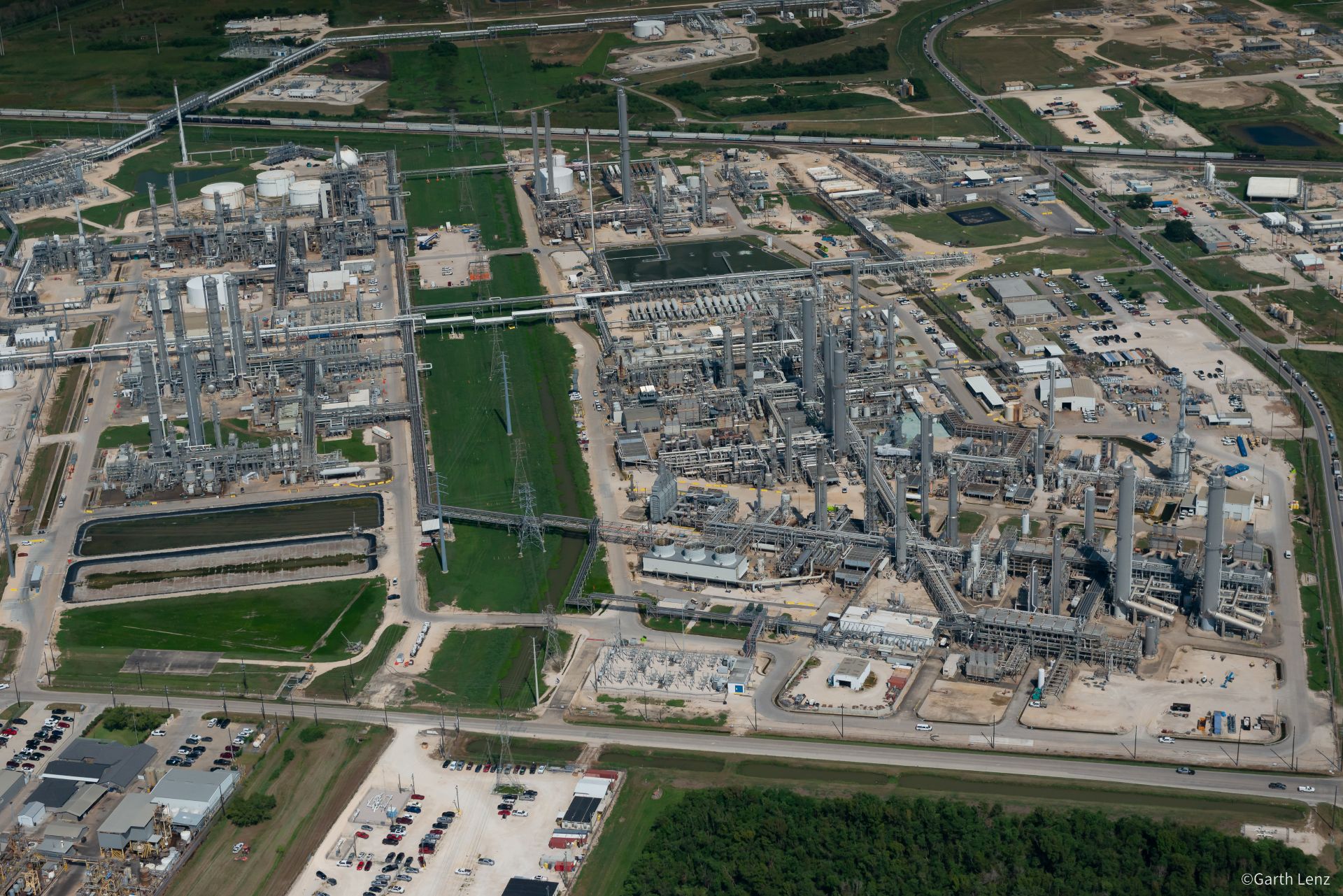
Historically, the oil and gas industry treated “wet” gas as a byproduct produced by purifying crude oil and consumer-grade natural gas. NGLs are typically separated from methane at gas processing plants before being transported mainly via pipeline to fractionators. These are refinery-like industrial facilities that split the mixed liquids into individual products: ethane, propane, butane, and pentane.
But as advances in horizontal drilling and hydraulic fracturing unlocked vast amounts of gas from shale formations previously considered too expensive to develop, the price of consumer grade “dry” gas declined from 2009 to 2011, remaining relatively low until 2021. The industry’s views of NGLs transitioned from thinking of them as a byproduct to a valuable “co-product,” as one 2013 paper put it.
“The NGL market historically has been a ‘niche’ market that sort of got pushed and shoved by refiners and natural gas markets, but it is a very important market,” Ron Gist, a managing consultant with Houston-based Purvin & Gertz, told The American Oil & Gas Reporter.
With an eye on NGLs, the industry began moving into more “liquid-rich” gas production areas, such as parts of the Utica shale of Ohio, western Pennsylvania, and West Virginia. Another example is the Eagle Ford Shale in Texas, where oil and gas producers focus on NGLs in some parts of the region.
This NGL expansion contributed to a wave of new ethane “cracker” plants, which convert ethane into ethylene, a key component of plastics and other petrochemicals. As of June 2025, at least 14 ethane cracker projects nationwide had been announced or were moving ahead, according to public records and company announcements tracked by Oil & Gas Watch.
International demand for ethane has also increased, with the U.S. serving as one of the few countries capable of exporting ethane. Ethane exports reached 3.1 million barrels per day in 2025, going mainly to China, Japan, Canada, Mexico, and South Korea, where NGLs feed the petrochemical industry. Ethane exports alone increased nearly 20 percent in 2025, driven by demand for raw ingredients for new ethane crackers in Mexico and China.
As with methane, the production and export of ethane and its use to make plastics has an impact on the climate and local air quality, though air pollution from new NGL facilities is difficult to track.
Permit documents, where available, indicate that 13 of the NGL projects tracked on Oil & Gas Watch could emit up to 2,827 tons every year of health-harming “criteria” air pollutants that form smog and soot. Greenhouse gas emissions data are largely unavailable for these projects because they usually obtain “minor source” air permits, which do not require disclosure of potential greenhouse gas emissions.
However, researchers estimate production of common plastics like polyethylene and polypropylene, which rely on ethane and propane, can emit nearly 2 tons of greenhouse gases per ton of plastic produced.