Trump rebrands struggling oil refinery project along Texas coast as ‘America First’ refinery

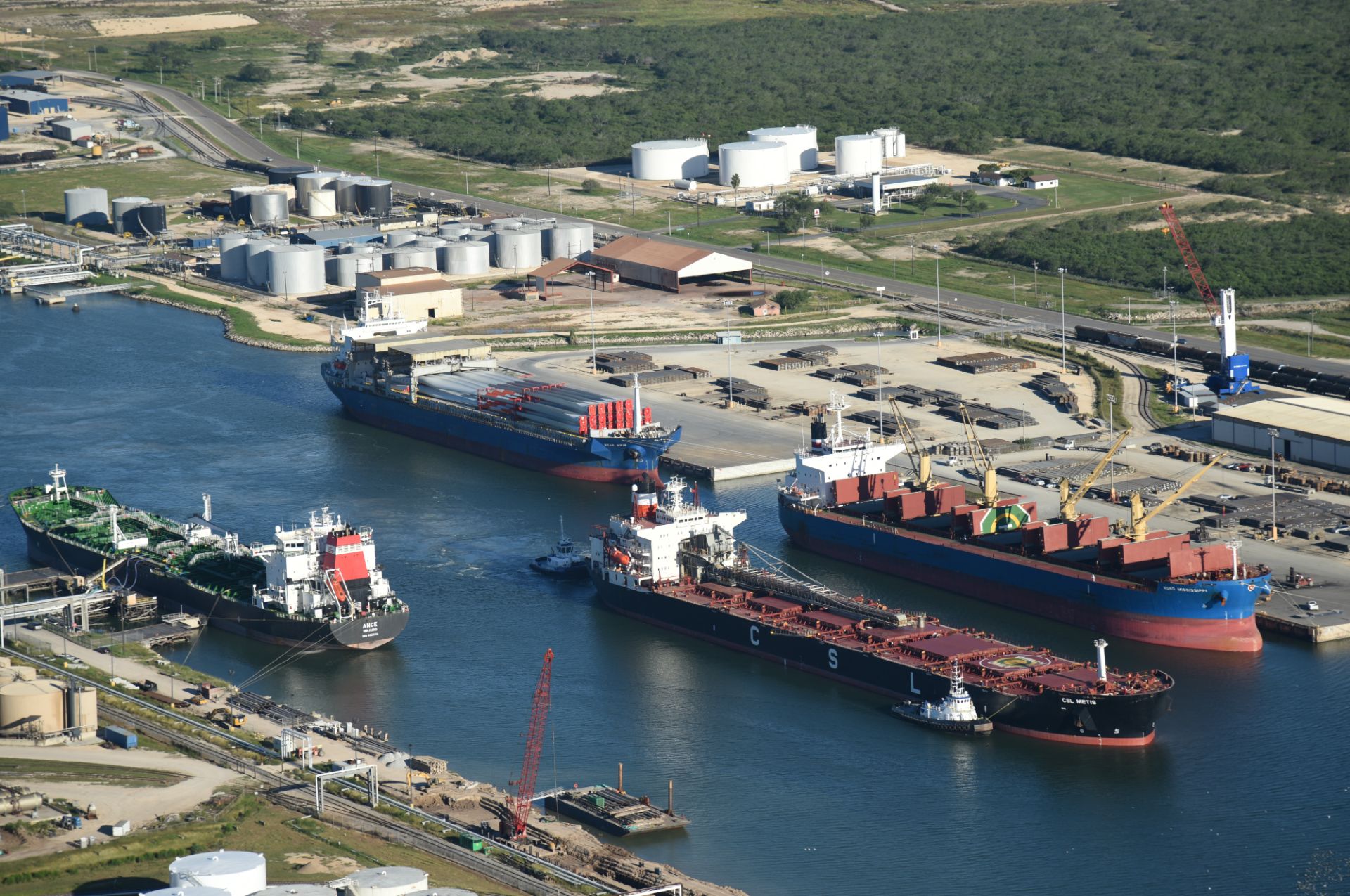
In mid-March, amid a spike in gas prices brought on by the war in Iran, President Trump announced that American First Refining would build a crude oil refinery outside of Brownsville, Texas, along the Gulf Coast, adding, “This is what AMERICAN ENERGY DOMINANCE looks like.”
The $3-4 billion project, backed by India's Reliance Industries, operator of the world's biggest refining complex, is being promoted as a hydrogen-powered refinery that would produce some of the cleanest gasoline, diesel, and jet fuel in the country. Unlike most other Gulf Coast refineries, it would be designed to process light, low-sulfur crude oil from Texas’ fracking fields rather than the heavier crude with higher sulfur content piped in from Canada and Venezuela.
John V. Calce, chairman and founder of America First Refining, said in a statement that “for the first time in half a century, the U.S. will build a new refinery designed specifically for American shale oil.”
The announcement did not mention that, for almost a decade, the 240-acre Port of Brownsville site has been at the center of a struggling effort to construct a 160,000 barrel-per-day oil refinery under a different name.
So it’s not really a proposal to build a refinery “for the first time in a half century” – or a new refinery project at all.
A company called Jupiter Brownsville LLC originally developed the project and applied for state permits from the Texas Commission on Environmental Quality (TCEQ) in 2017. Environmental groups and local shrimpers protested the project, and after an administrative hearing, the state agency issued permits that reduced proposed nitrogen oxide emissions and increased pollution monitoring.
Texas issued the permit in 2021. But since then the developers have asked for three extensions to begin construction. In January 2024, Houston-based Element Fuels took over the project. In June 2025, Element Fuels announced it had completed site preparation and pre-construction for a new hydrogen-powered refinery and power plant at the Port of Brownsville.
Then in December 2025, a company called “America First Refining,” which shares the same ownership as Element Fuels, took over, according to Inside Climate News.
About two months later, on Feb. 26, TCEQ granted America First Refining an extension to allow it to delay the start of construction until Oct. 19, 2027. That marked the third and final permit extension permitted under Texas law.
On top of struggling to find funding and secure all the necessary permits, the refinery project also requires the construction of oil pipelines to Brownsville from the shale oil fields in the Permian Basin, in West Texas and New Mexico, and the Eagle Ford Shale, in central and East Texas, another operational challenge.
The South Texas Environmental Justice Network has opposed the project for seven years because of the toxic emissions it would release into nearby low-income communities in Brownsville and the environmental harms it could cause to sensitive coastal ecosystems.
“This dangerous oil refinery was dying because of a lawsuit and it’s a bad investment, but the Trump Administration has unfortunately revived it,” the network said. “This dangerous oil refinery project has faced investor pullouts, bankruptcy, a lawsuit, and community opposition.”
The group also worries that the oil refinery would use so much water it would exacerbate shortages of fresh water in the arid region. This would mean “pushing the Rio Grande Valley towards a major water shortage catastrophe as is currently being experienced in Corpus Christi,” the organization argues.
Luke Metzger, Executive Director of Environment Texas, said he doubts Trump's description of the refinery as "one of the cleanest refineries in the world.” Metzger said he has not seen any evidence justifying the designation: “No lifecycle analysis, no third-party comparison against peer refineries, no emissions-intensity metric showing it would rank among the world’s cleanest.”
“Hydrogen-powered does not automatically mean low-carbon,” Metzger said. “Commercial hydrogen producers and oil refineries commonly make hydrogen from natural gas, which emits CO2,” said Metzger. “Refineries also already use large amounts of hydrogen as part of normal operations. So even if this refinery reuses byproduct hydrogen and has somewhat lower onsite emissions than an older plant, the fuels will still emit CO2 when burned and the hydrogen itself is often fossil-derived.”
Until several years ago, the Port of Brownsville was the last major deepwater port in Texas undeveloped by large fossil fuel projects. But the proposed refinery, along with a major Liquefied Natural Gas export terminal under construction, threaten to upend the sensitive ecological balance maintained in the Rio Grande Delta, where the Rio Grande spills into the ocean. The launch site for SpaceX is also only a few miles from the port.
“The broader channel buildout has long raised concerns about effects on wetlands, fisheries, birding, and endangered species habitat near places like Laguna Atascosa National Wildlife Refuge,” Metzger said.
The Gulf Coast is already home to eight of the ten largest refineries in the country. Andy Lipow, head of consulting firm Lipow Oil Associates, told The Houston Chronicle that it doesn’t seem like “the U.S. Gulf Coast really needs another refinery, especially down in Brownsville.”
John Aueres, managing director of Refined Fuels Analytics, also expressed skepticism that the project would live up to Trump’s expectations.
"Initial announcements like this by the Trump administration have a lot of hyperbole," Auers told Reuters.
Case in point: In his Truth Social post, Trump called the refinery a “$300 billion deal.” But America First Refining’s press release said the deal will “improve” the U.S. trade imbalance by $300 billion. Previous cost estimates for the refinery ranged between $3 and $4 billion.
In a post on X, University of Texas at Austin energy expert Michael Webber called “the level of disinformation” about the new refinery released by President Trump and Cabinet members including Energy Secretary Chris Wright and Interior Secretary Doug Burgum to be “truly stunning.”
Trump attributed Reliance Industry’s “tremendous investment” (an investment the company is yet to confirm) to his administration’s streamlining of permits and lowering of taxes. Reliance Industries, owned by billionaire Mukesh Ambani, has reportedly signed a 20-year deal to buy, process, and distribute shale oil from the U.S.
Charles McConnell, a former assistant energy secretary with the Obama administration who now directs the Center for Carbon Management in Energy at the University of Houston, said the America First Refining project appears to have a better chance of being built under the Trump Administration.
“First and foremost, the world is looking at places that are secure for energy conversion, and the Gulf of Mexico is a lot more secure than the Straight of Hormuz,” he said.
McConnell said over the last couple decades it’s been hard for oil companies to invest in refinery builds due to the long slog of necessary environmental issues, “but this administration seems to be much more relaxed about that and enthusiastic about encouraging investment.”
Lead photo: Vessel traffic in the Brownsville Ship Channel. Photo courtesy of the Port of Brownsville.