Conservation groups raise concerns about 520-mile gas pipeline from West Texas to Phoenix area

A natural gas pipeline planned from West Texas to the Phoenix area would cross sensitive conservation land in Texas, New Mexico, and Arizona on its way to provide power for data centers and other large users in central Arizona.
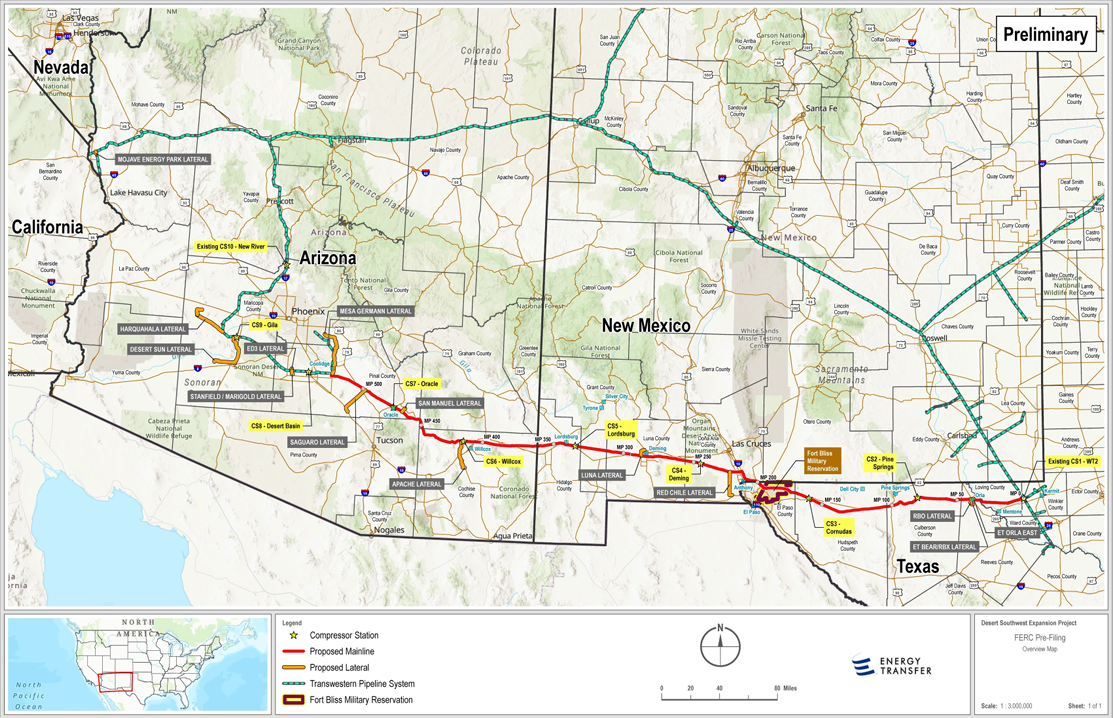
Transwestern, a subsidiary of U.S. pipeline giant Energy Transfer, on March 27 began the early stages of the permitting process for its Desert Southwest Expansion. The project consists of a 526-mile main line, 4 feet in diameter, along with 13 smaller segments branching off the main line totaling another 182 miles. Aside from the 708 miles of new pipeline, the company wants to build eight new compressor stations in Texas, New Mexico, and Arizona.
The pipeline is one of more than a dozen planned to relieve the industry’s natural gas bottleneck in the Permian Basin of West Texas and New Mexico, where drilling for oil often also produces gas as a byproduct that must be burned or released. These gas surpluses, and limited space in the region’s existing pipelines, have sunk the price of gas into the negative. That means gas producers have often had to pay customers to take excess gas off their hands.
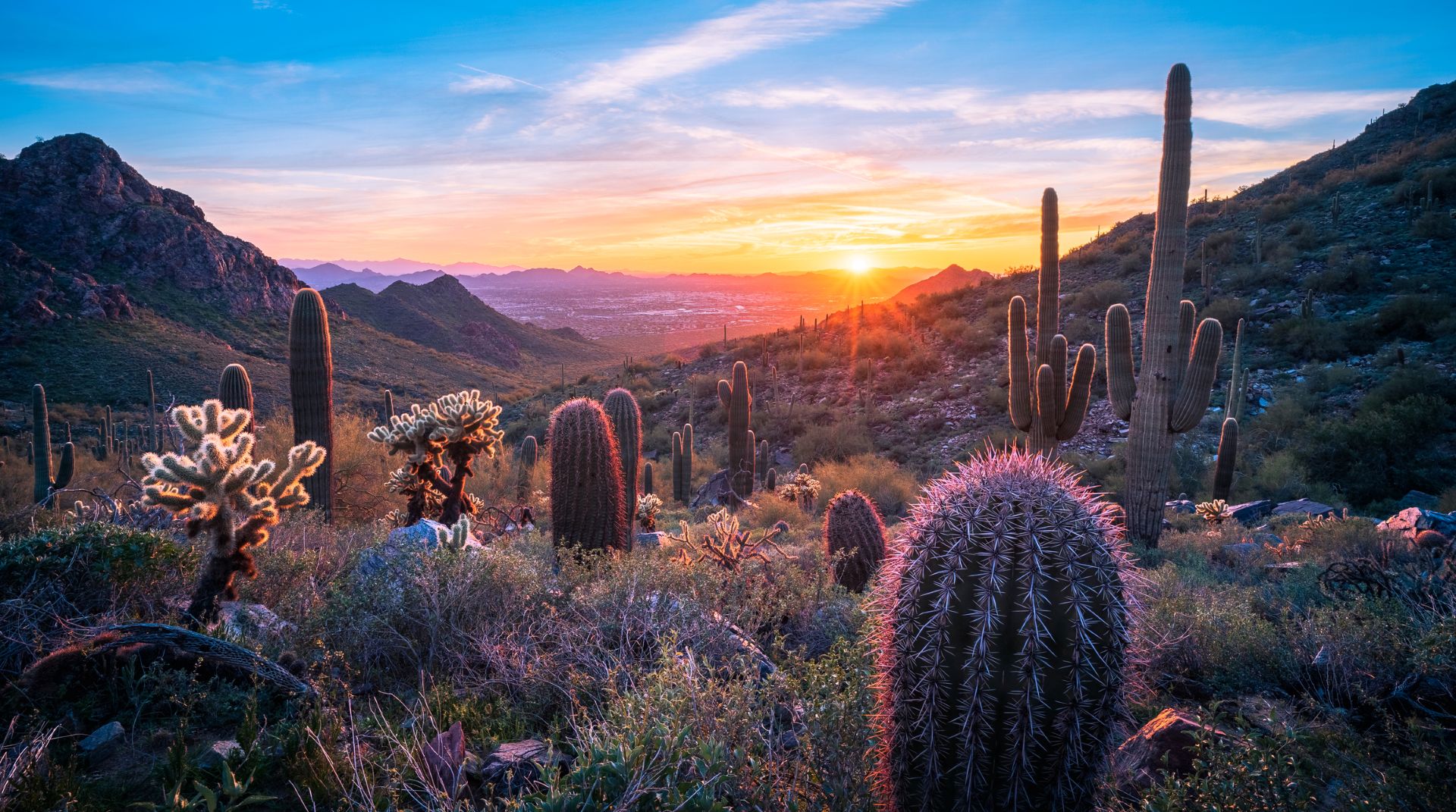
Environmental and clean energy advocates say the process of building access roads, digging trenches, laying pipelines, and crossing waterways would tear up vast swaths of sensitive desert landscapes home to rare plants and animals. They also argue that the pipeline would lock in decades of fossil fuel expansion and use, increasing air pollution, fueling the climate crisis, and depleting scarce water resources.
“This industrial pipeline threatens habitat for some of the most vulnerable wildlife in the country,” said Graham Rex, an attorney at the Tucson-headquartered Center for Biological Diversity. “The American Southwest is already buckling under the pressure of climate change, unprecedented drought and the boom in data center construction. A massive new fossil fuel pipeline is the last thing the region needs.”
Northeast of Tucson, the pipeline would cross the 55,000-acre Muleshoe Ranch Cooperative Management Area, a mosaic of protected lands managed by the federal government and private landowners. In a June 18 letter to the Federal Energy Regulatory Committee (FERC), Daniel Stellar, Arizona director of the Nature Conservancy, said the pipeline project risks “further fragmenting one of the largest blocks of intact wildlife habitat in the state.”
The pipeline would also cross the lower San Pedro River basin, among the largest natural, intact desert landscapes in Arizona. While much of the north-flowing river runs dry during parts of the year, summer monsoon rains bring it to life, providing habitat to rare plants and animals.
Melissa Crytzer Fry, Lower San Pedro Watershed Alliance chairperson, wrote in an Aug. 4 letter to FERC that the pipeline “running alongside one of Arizona’s most pristine and important ecological riverine corridors spells potential disaster for wildlife and water resources already impacted by a devastating 26-year period of megadrought.”
The pipeline’s current route would also cross part of Guadalupe Mountains National Park, according to the National Park Service. The 86,000-acre park on the border of Texas and New Mexico is one of the rare large parcels of public lands in Texas, a state where more than 93 percent of land is privately owned.
Energy Transfer says the pipeline will “help ensure a consistent, reliable supply as communities and industries continue to grow.” Its anchor customer, utility Arizona Public Service company, has said the pipeline will provide fuel for natural gas-fired power plants to support data centers in the utility’s service territory, according to Utility Dive. Tucson Electric Power, UniSource Energy Services, and the City of Mesa, Arizona, are also negotiating with Transwestern for pipeline space, the outlet reported.
With cheaper electricity than California and proximity to a major fiber-optic network, the Phoenix area has emerged as the second-largest hub for data centers in the U.S. after Virginia, according to APM Research Labs. The industry’s growth has led to backlash, with residents concerned about rising power costs and the draining of the region’s scarce water supplies. In May, a developer that had proposed the state’s largest-ever data center in Pinal County, southwest of Phoenix, scaled back its project by 80 percent following a local backlash.
Democratic Arizona Gov. Katie Hobbs came out early in favor of the pipeline project, saying in a May 10 statement that “with existing pipelines fully subscribed, securing additional natural gas capacity is critical to supporting Arizona’s long-term prosperity.”
Multiple Arizona environmental groups criticized Hobbs for backing the project. Sandy Bahr, director for the Sierra Club’s Grand Canyon Chapter, said that the pipeline would “lock in gas use for decades.”
“The Governor should have at a minimum waited until she knew more about the impacts of this proposed gas pipeline instead of once again just giving the Arizona utilities … what they want,” Bahr said.
Adrian Keller, Arizona program director for Solar United Neighbors, said that local solar energy is the “cheapest and fastest way to lower energy bills and meet Arizona’s rapidly growing energy demand.”
“In the sunniest state in the nation, it is disappointing that Governor Hobbs is supporting the expansion of a new methane gas pipeline that risks exposing Arizona ratepayers to price volatility and unpredictability in the gas market for decades,” Keller continued.
In the San Pedro River watershed between Tucson and Phoenix, Energy Transfer representatives told attendees during an April 23 public meeting that they are planning a branch of the pipeline to serve a large power plant project, according to the Lower San Pedro Watershed Alliance. The area under consideration for the power plant and pipeline is only a few miles from 6,000 acres of public land that was recently preserved as part of a deal to allow mining and water supply projects in other parts of Arizona.
“The impending water use that will be necessary to support an energy center upstream of these mitigation properties will threaten their very purpose, ecological value and existence,” Fry said in a letter to FERC.
Farther south, in the Muleshoe Ranch area, the pipeline route would pass close to Hot Springs and Bass canyons, which have streams that support seven native desert fish species. These include the endangered loach minnow, spikedace, and Gila chub. Constant water flow is rare in a desert ecosystem that only receives about 13-14 inches of rainfall per year on average. The landscape is also home to endangered birds, including the yellow-billed cuckoo and Mexican spotted owl.
“Construction of a large-diameter pipeline typically involves a wide disturbance of corridor, vegetation clearing, trenching, blasting in rocky terrain, heavy equipment uses, and ongoing maintenance access,” wrote Stellar, with the Nature Conservancy. “These activities carry the potential for direct habitat loss, increased mortality risk, noise, light and chemical pollution, soil degradation, and long-term fragmentation.”
Energy Transfer plans to officially file its application with FERC in November, which will trigger an additional round of public meetings and reviews. The company hopes to have the pipeline in operation by late 2029.