SpaceX gets into gas pipeline business to fuel its rocket ambitions as Trump relaxes oversight

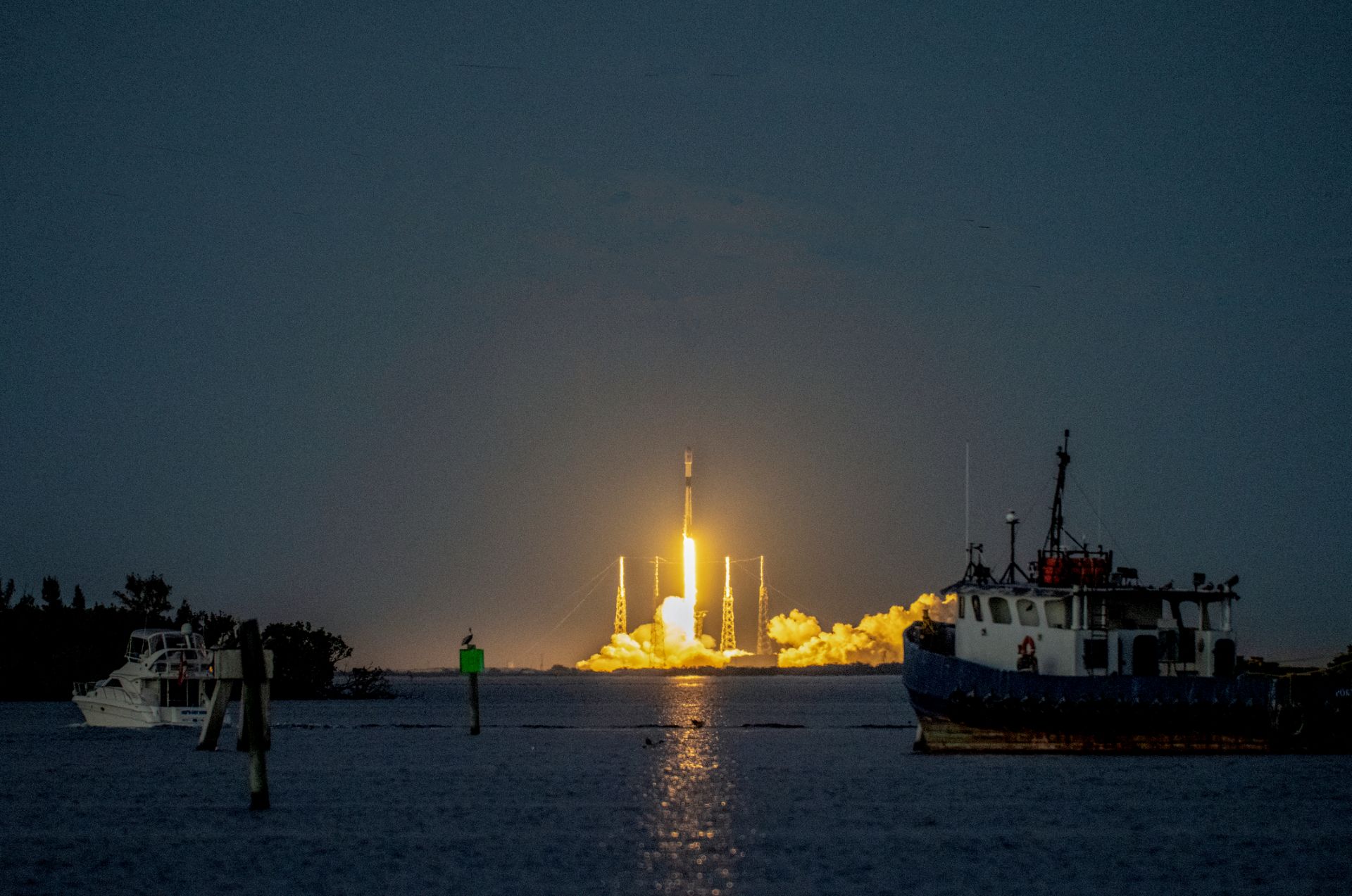
SpaceX, the aerospace company owned by Elon Musk, has requested to build a 32-mile pipeline to supply natural gas to the Cape Canaveral Space Force Station in anticipation of a major increase in rocket launches, according to records of the Florida Public Service Commission.
The pipeline, along with another, shorter one connecting to the SpaceX launch facility in Cameron County, Texas, mark the company’s move into gas infrastructure, which is typically built and operated by energy and pipeline firms.
SpaceX is pioneering reusable rockets, designed to return to launch sites and be redeployed after short turnarounds. SpaceX is pursuing a major expansion of its rocket-launch operations in Florida, centered on Cape Canaveral Space Force Station and Kennedy Space Center.
While the company touts the job creation potential of the project, local residents and environmentalists have raised concerns, including how the expansion could impact public beach access, water quality, coastal ecosystems, and habitat protection. The launch sites are surrounded by sensitive coastal areas, including the Indian River Lagoon, a grouping of several lagoons along the coast just south of Cape Canaveral that boast fragile biodiversity.
According to a recent analysis, the Indian River Lagoon is a $28.3 billion a year economic driver that supports thousands of species of plants and animals, provides critical nursery habitat for fish and shellfish, and sustains vital commercial and recreational fisheries. The proposed 32-mile gas pipeline would traverse Merritt Island, a low-lying barrier island with critical coastal habitat that borders the lagoon.
Katie Bauman, Florida policy manager for the Surfrider Foundation, said the pipeline raises questions about disturbance and impacts during construction as well as the potential for leaks or ruptures in sensitive coastal areas.
“The pace of private space industry growth is outstripping our ability to understand how surrounding coasts and waterways are being impacted,” said Bauman. “This watershed is still recovering from years of pollution and degradation. Large-scale construction, more paved surfaces, and rocket operations that require millions of gallons of water increase stress on this watershed and put its recovery at risk.”
Florida's Space Coast, due east of Orlando and midway between Jacksonville and Miami, has long been ground zero for U.S. rocket launches. However, the SpaceX agenda marks a transition from Florida as a launch hub for conventional rockets to a high-frequency launch complex for a fleet of megarockets.
SpaceX has plans for up to 44 launches per year at the Kennedy Space Center and up to 76 per year at its nearby Cape Canaveral Space Force Station of its new breed of rockets, known as Starship and Super Heavy. The SpaceX Starship sits on top of the Super Heavy booster. They launch together and are fueled by liquefied natural gas (LNG). Rising to over 400 feet, the megarocket is the largest and most powerful rocket ever made.
Currently to fuel launches, SpaceX transports hundreds of truckloads of LNG to the launch sites, which the company says is impractical and inefficient. Vertically integrating gas transport into its operations also allows SpaceX to streamline operations and provides an edge over industry competitors.
Ted Kury, director of energy studies at the University of Florida’s Public Utility Research Center, said SpaceX is likely building the pipeline to increase control over gas supply and price.
“They want to make sure that they are the number one customer on the pipeline,” said Kury. “If you're buying space on someone else's pipeline you're at the mercy of the contract and if the pipeline changes hands or if other rules change you might have to incur significant legal costs to enforce that contract.
The proposed pipeline would connect to Florida Gas Transmission's existing interstate pipeline system. A SpaceX subsidiary, Coastal Connect Services, has requested the Florida Public Service Commission approve the new pipeline in Brevard County, where Cape Canaveral is located.
An August 2025 White House Executive Order “Enabling Competition in the Commercial Space Industry,” requests that government agencies eliminate or expedite environmental reviews and other obstacles to space launch and reentry licenses and permits. In response to this directive, in July 2026, the Federal Aviation Administration (FAA) proposed a rule allowing the Secretary of Transportation to waive requirements under 13 federal environmental and natural resource laws for commercial space launch and reentry actions, including the National Environmental Policy Act (NEPA), the Endangered Species Act, and the Clean Water Act.
Some environmentalists say they are concerned about this waiver of environmental rules and the impact of the Space X expansion on the protection and restoration of the 156-mile Indian River Lagoon system.
Jim Moir, the Indian Riverkeeper, said he was fascinated by NASA’s space program as a child and understood there was already some assumed environmental risk to the endeavor. However, he believes the government-run space program then always had to answer to the public.
He worries that is no longer true with a privately owned company, and that public land and public resources are being used for private profit with little consideration of the risks to clean water, public health, and natural habitats. He said the government has made a mistake by relinquishing public oversight to private companies like Space X, which enjoy a near monopoly.
“The expansions of SpaceX and the rest of the commercial space industry and the expected operational increases may have some of the biggest negative environmental impacts Florida has ever seen,” said Moir. “To be clear, it is not only the launches that do damage to the environment, but the infrastructure development and the removal of regulatory oversight.”
Musk’s space company has additional plans to expand into other parts of the Southern United States, as well. In August, the company announced plans to spend up to $100 billion building a launch facility in Louisiana capable of supporting thousands of launches annually.
“We’re preparing to build a spaceport that, until now, has only existed in science fiction,” said Musk in a statement accompanying the announcement of what will become the company’s largest launch site. “SpaceX was founded to bring about a future where humans are out exploring amongst the stars, which will only be possible when we make going to space as routine as flying on an airplane. Starbase, Louisiana will unlock that future.”
The site will be located in Vermillion Parish, midway between New Orleans and Houston along the Gulf Coast. It is a popular migratory bird spot, nested between wildlife conservation areas, and a key location in the recovery of endangered whooping cranes.
While SpaceX said it plans to “proactively address potential impacts to wildlife, fisheries and their supporting habitats,” Louisiana environmentalists remain unconvinced, especially in light of the Trump Administration’s attempt to minimize environmental reviews and safeguards for the space industry.
Rebecca Triche, executive director of the Louisiana Wildlife Federation, said that while her group does not oppose commercial space development or its economic opportunities, they strongly oppose having the project development review process limited and federal permitting requirements waived.
“We deserve no less than a full accounting of the potential impact of this project on wildlife, habitat, water, and coastal resources, as well as a clear understanding of how these potential impacts will be identified and addressed,” said Triche. “The federal permitting requirements under consideration to be waived provide this essential accountability.”
In neighboring Texas, the SpaceX launch site near Brownsville has drawn the ire of local residents after catastrophic explosions propelled debris for miles around onto surrounding state park and federal wildlife refuge home to hundreds of thousands of shorebirds, sea turtles, and other species. A 2024 study found that after a launch, every single monitored shorebird nest near the launch site suffered egg damage or loss. In June, tribal and conservation groups sued the U.S. Fish and Wildlife Service to stop a land trade that would hand over 715 acres of the adjacent Lower Rio Grande Valley National Wildlife Refuge in south Texas to SpaceX.
“Elon Musk has built his explosive SpaceX facility in the middle of a major wildlife corridor home to endangered and threatened species like ocelots and wetlands,” said Bekah Hinojosa, a Brownsville native, and co-founder of the South Texas Environmental Justice Network, regarding the lawsuit. .