After surviving brush with death, pastor fights to save his community from industrial 'MegaPark'

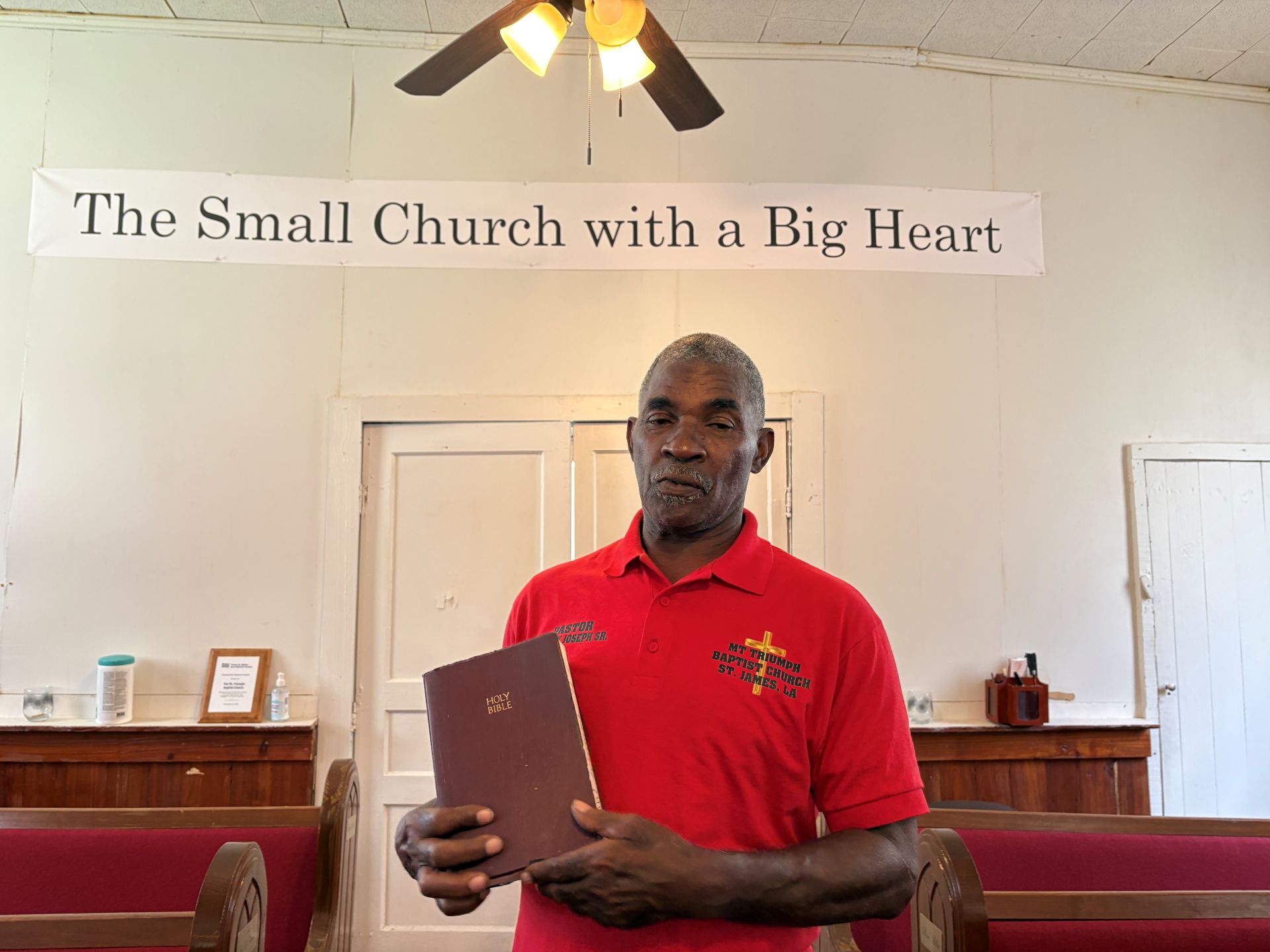
Modeste, Louisiana -- In 2004, a storm ripped down tree branches over a canal in Ascension Parish, about 75 miles northwest of New Orleans. Harry Joseph, an equipment operator for the parish, cut up the wood and hauled it away, but as he left, the saw slipped from his hand.
His supervisor was startled. “He said, ‘Harry, you dropped that saw and you didn’t even seem to notice it – you just kept walking,” Joseph recalled. It wasn’t the first incident like this. “’I think you got to go see a doctor.’”
Joseph visited a specialist and was diagnosed with ALS, also known as amyotrophic lateral sclerosis or Lou Gehrig’s disease, a neurodegenerative disease that destroys nerve cells in the brain and spine and causes paralysis and death. “My doctor told me I had only two or three years to live,” said Joseph, 49 at the time. “My children started crying and I said, ‘You can’t cry -- You got to be stronger than that.’”
Twenty-two years later, at the age of 71, Joseph is not only still alive but strong and more inspired than ever to help his community. He and his daughter are leaders in a David vs. Goliath legal battle by this small, historically Black community to stop a proposal by developers to replace their neighborhood with a massive industrial park called the RiverPlex MegaPark.
Helping his neighbors is Joseph’s way of giving thanks for his own miraculous recovery. “It was a miracle. God talked to me and told me that I would heal,” said Joseph, who is now pastor of the 114-year-old Mount Triumph Baptist Church. “I love helping people -- that is the love of my life. And I am going to help the people here fight to save their community.”
His daughter, Ashley Gaignard, the founder and president of Rural Roots Louisiana, said: “My father’s victory over ALS showed me what true strength and faith look like. Watching him fight with unwavering belief in God shifted something in me. When I faced my own cancer battle, it didn’t feel impossible—because I had already seen what the power of God can do. His healing became my proof, and his journey made mine easier to walk.”

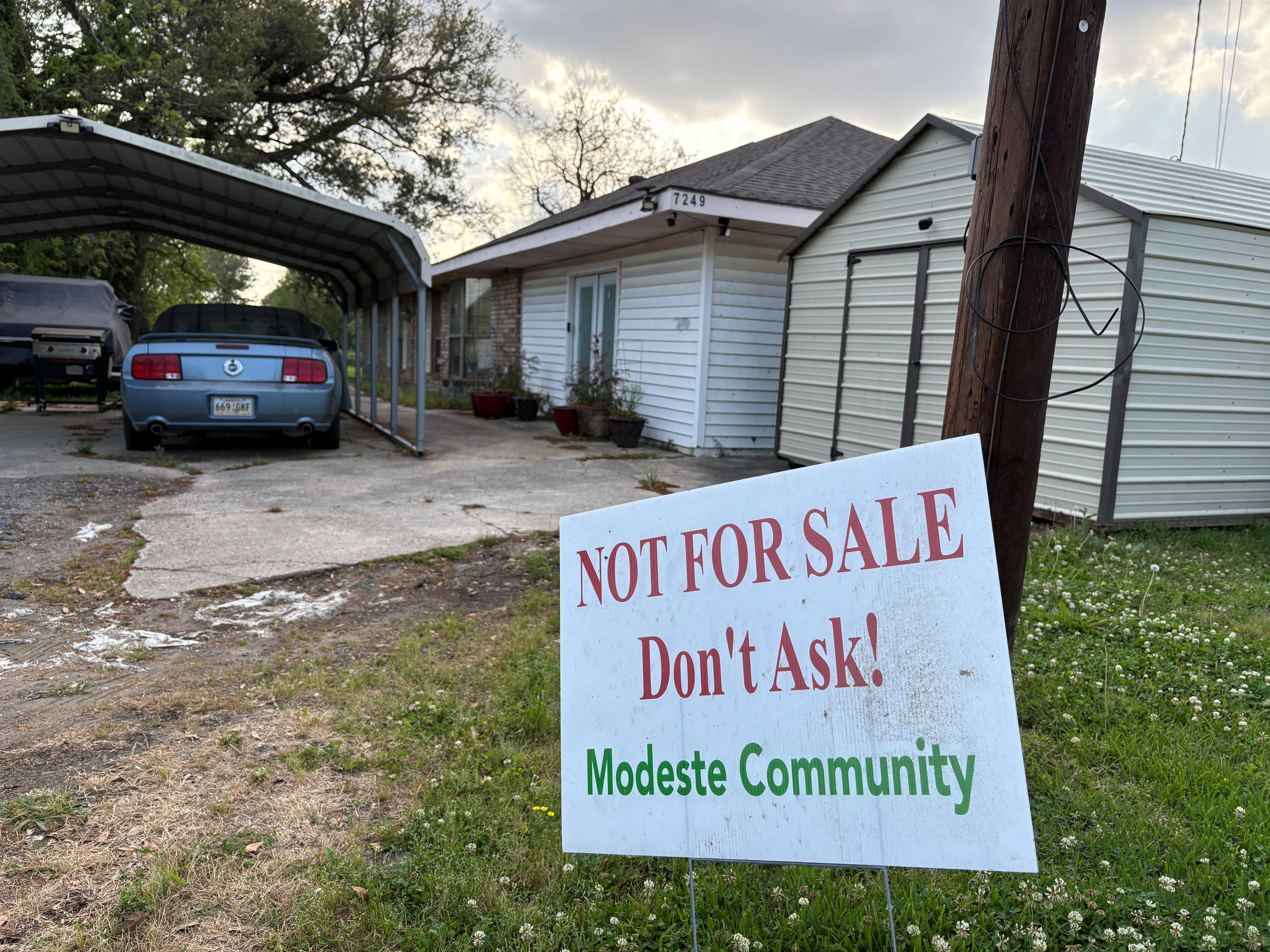
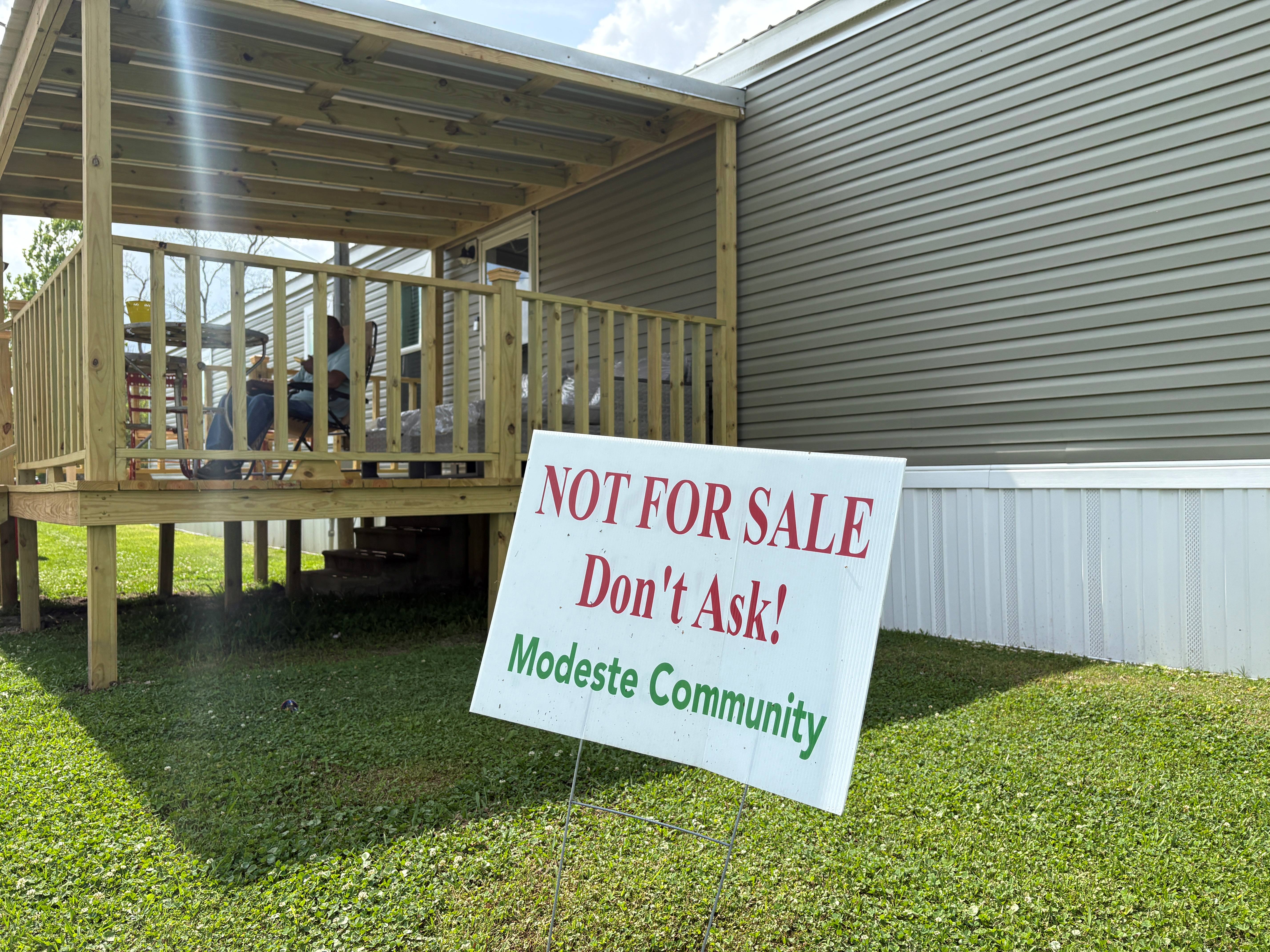
The Rev. Joseph and Gaignard and a coalition of allied organizations are fighting in court to protect local residents from having their community removed for the 17,000-acre “Mega Park,” along the Mississippi River between New Orleans and Baton Rouge. The planned Ascension Economic Development Corp. project would buy out people in this unincorporated neighborhood of 600 and subject those who remain to the pollution and noise from two massive new fertilizer factories, a steel plant, gas-fired power plant, and carbon waste disposal pipelines.
On April 2, Mount Triumph Baptist Church and Rural Roots Louisiana were joined by the Louisiana Bucket Brigade, Center for Constitutional Rights, and Environmental Integrity Project in filing three lawsuits against Ascension Parish for failing to follow required legal processes and public notification requirements to allow the local community to voice their objections to the project. Parish elected officials also signed secrecy agreements (non-disclosure agreements) that prevent them from talking to their own constituency about the development or their removal.
Among other things, the lawsuits argue that the developers ignored requirements to identify and preserve important cultural and historic sites. These include the burial grounds of enslaved people who worked on plantations along the Mississippi River. Among the ancestors who lived and may be buried in the area are relatives of the Rev. Joseph.
Rev. Joseph said he is also worried about his living neighbors. He worries the air pollution and toxic chemicals from the ammonia manufacturing plants will contribute to already elevated disease rates in an area notorious as “Cancer Alley.”
In addition to his daughter’s battle with breast cancer, “my brother died of colon cancer, my other brother died of cancer, and my younger and older sisters both died of cancer,” Joseph said. “So we had four in my family who died of cancer. I don’t see the benefit of bringing in all these additional industrial plants and all their pollution in here. They say the benefit is jobs, jobs, jobs. But I don’t see our local people getting these jobs.”
A 2025 study by Tulane Law Clinic researchers found that people of color in Louisiana are consistently under-represented in well-paid jobs at chemical plants and refineries in the state, even after correcting for educational discrepancies.
The Rev. Joseph’s family does not come from wealth. He was born in 1954 as one of nine children in Smoke Bend, Louisiana, just down the road from Modeste. His ancestors were slaves on the cotton and sugar cane plantations that lined the Mississippi before the Civil War. His mother was a maid at nearby Mulberry Grove Plantation and died when Joseph was only two. His father worked in the fields most of his life, harvesting sugar cane.
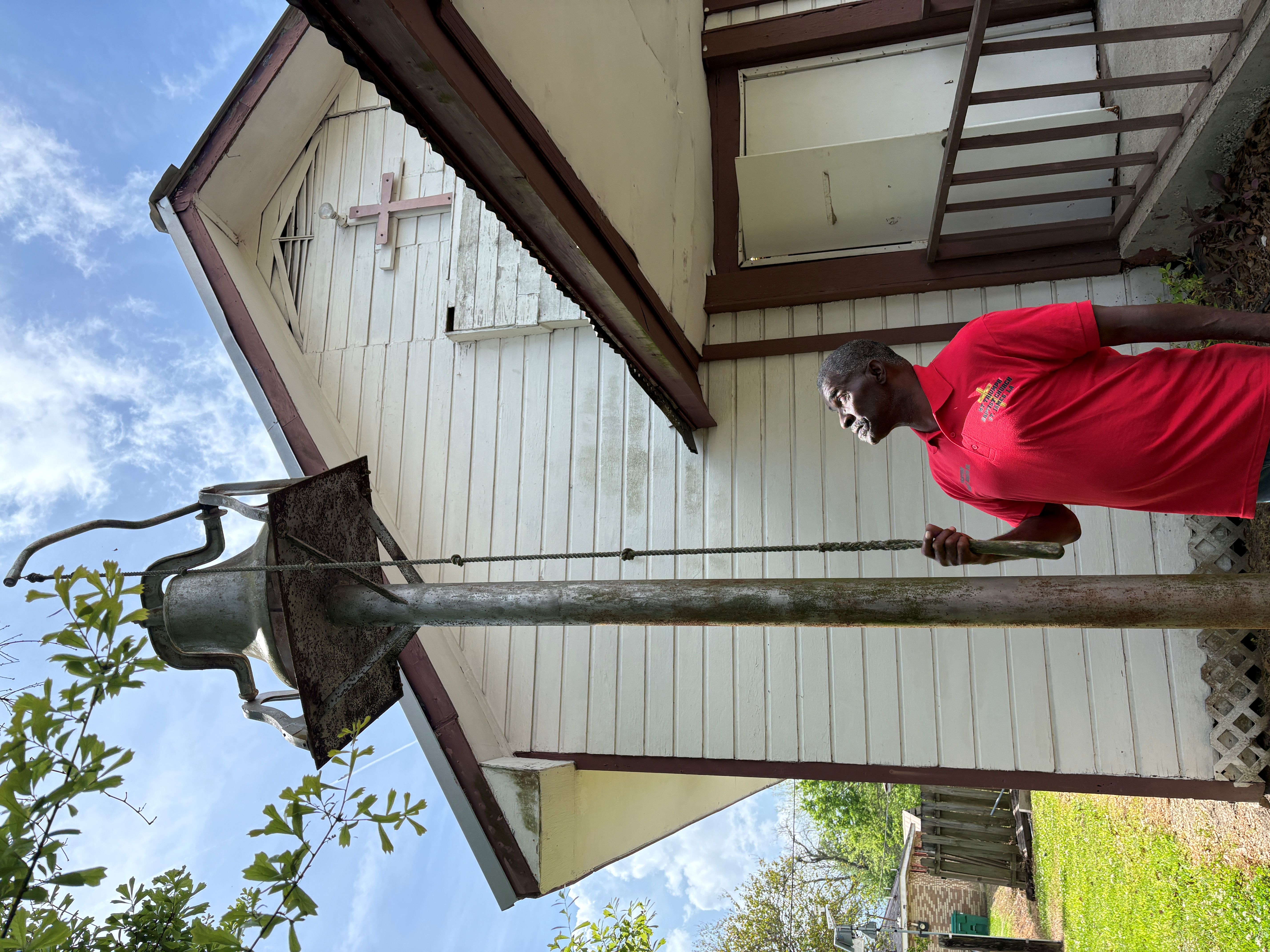
After working the sugarcane fields himself, in his 40s, Joseph went to work for Ascension Parish as a heavy equipment operator. He worked that job for 16 years and raised a family, including six children.
Then, in 2004, he was diagnosed with ALS, a frightening disease that attacks the nervous system and muscles. “You can’t even carry things in your hands,” Joseph recalled. “My legs would just give out. I would just fall down. I had doctors who told me I was all over with. But God has blessed me to be where I am today.”
After receiving treatment from a clinic in San Antonio, Joseph said he started praying constantly and deliberately spent a lot of time in the sun. He said he gradually noticed improvements, which allowed him, over time, to carry heavier things. About four years after his terminal diagnosis, Joseph said that his strength returned.
“I thank God for what he’s done in my life, because I’m still here,” the Rev. Joseph said. “I’m just a vessel, and my healing – what God did for me – nobody else can do this.”
His survival this long is rare. Most people diagnosed with ALS die within about three years, according to the ALS Association. Only 10 percent live for more than 10 years, and only about 5 percent are like Joseph and live more than 20 years. Stephen Hawking, the physicist and author, survived with ALS for 55 years before dying in 2018.
Although Joseph retired from his job with Ascension Parish, he followed his faith and took up a new calling about 15 years ago, becoming pastor of the more than century-old Mount Triumph Baptist Church. It is a tiny but historic church in St. James with a bell on a post outside its front door and a sign inside proclaiming: “The small church with a big heart.”
“When God healed me, he healed me to put me in the position that I am now – to help other people with their struggles,” the Rev. Joseph said.
Pastor Joseph threw all his energy into sprucing up the church, painting and repairing the old building. When storms and hurricanes pounded the local community, the Rev. Joseph and volunteers fed hundreds of displaced people. He stretched tarps over homes with smashed roofs and distributed portable generators.
Now he and his daughter are leading the fight against the RiverPlex Mega Park project. He said he’s concerned that the developers are offering some residents unfairly low prices for their properties – as low as $80,000 – that are not enough to allow them to buy replacement homes to live anywhere else. And competing buyers won’t likely be interested, with giant ammonia factories planned next door.
“You’ve got to have a heart,” the Rev. Joseph said. “To see an 80-year-old person who lived there all their lives and now they got to get uprooted, being forced out? What do you do with those people? If you ain’t got love in your heart, you are going to do just what they are doing.”

Pastor Joseph took a visitor on a drive through Modeste on a recent afternoon, showing the plantation house with a two-story porch and white pillars, the 1836-built Mulberry Grove, where his mother worked. He also showed the baseball field where he fielded fly balls as a young man.
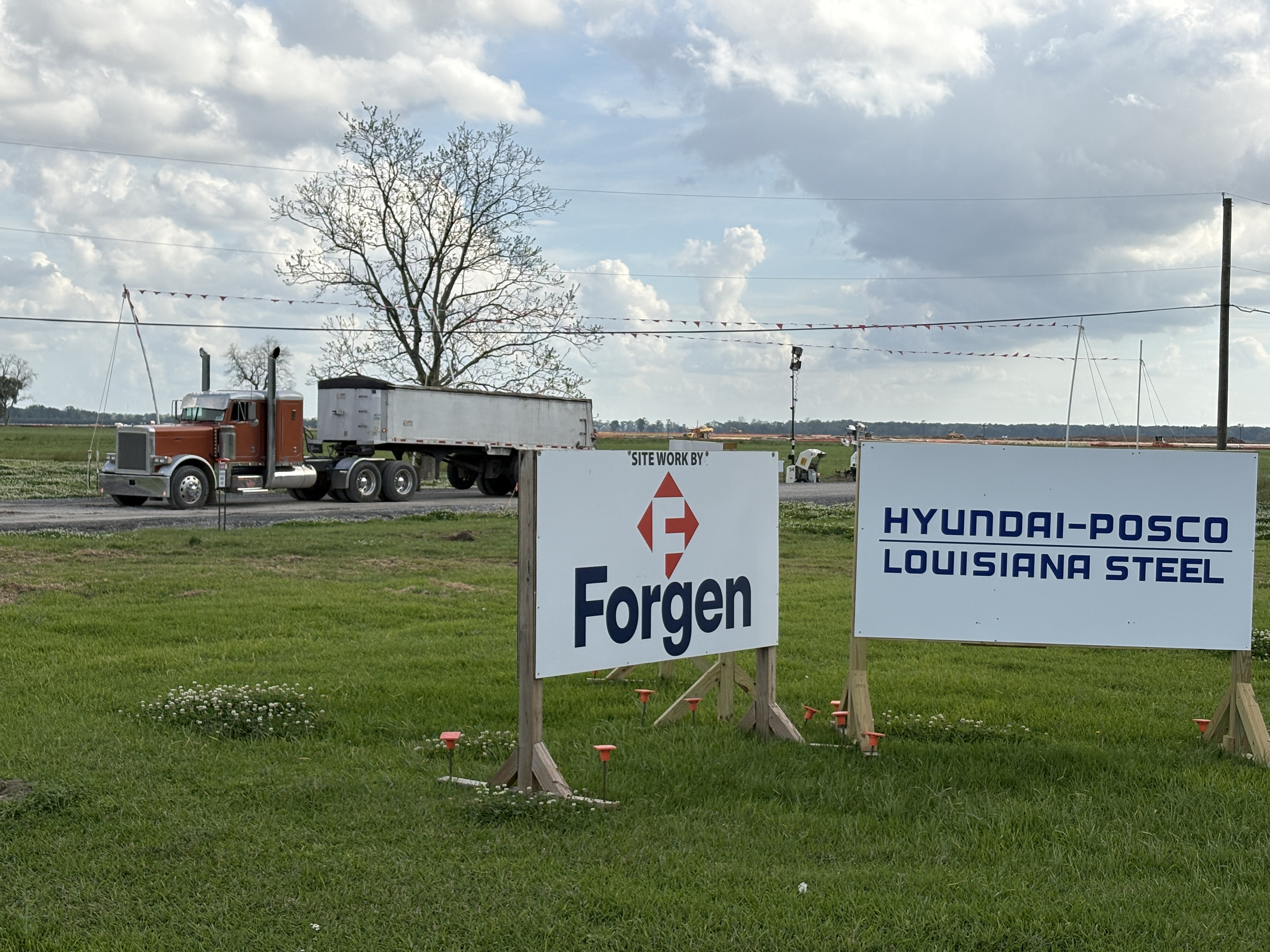
The field is on the edge of a close-knit community with humble single-story wood-frame homes with farm fields on one side and the Mississippi River on the other. The town has been quiet for years. But that recently changed when construction work started on the planned Hyundai steel plant site. Now hundreds of trucks rumble past every day.
Three times in the last month, dump trucks rumbling down the town’s main road – LA-405 – have overturned, spewing dirt and rock and causing massive traffic jams and endless headaches for local residents.
One of those angry about the RiverPlex project is Twila Collins, whom the Rev. Joseph visited in her home as she recovered from surgery. “I am concerned about being displaced,” said Collins, who works for Rural Roots Louisiana. “I want to stay here because we have a whole lot of history and a lot of memories here. My family has been here since the 1800s. I am not looking to have someone take away what is rightfully mine.”
Just down the road, Nieaka Henderson, a 53-year-old security guard, said she’s worried that her quality of life will be destroyed if a city of industrial plants spewing smoke are built surrounding her home. “I don’t want to live around all that pollution. And they don’t want to offer me enough to move,” Henderson said.
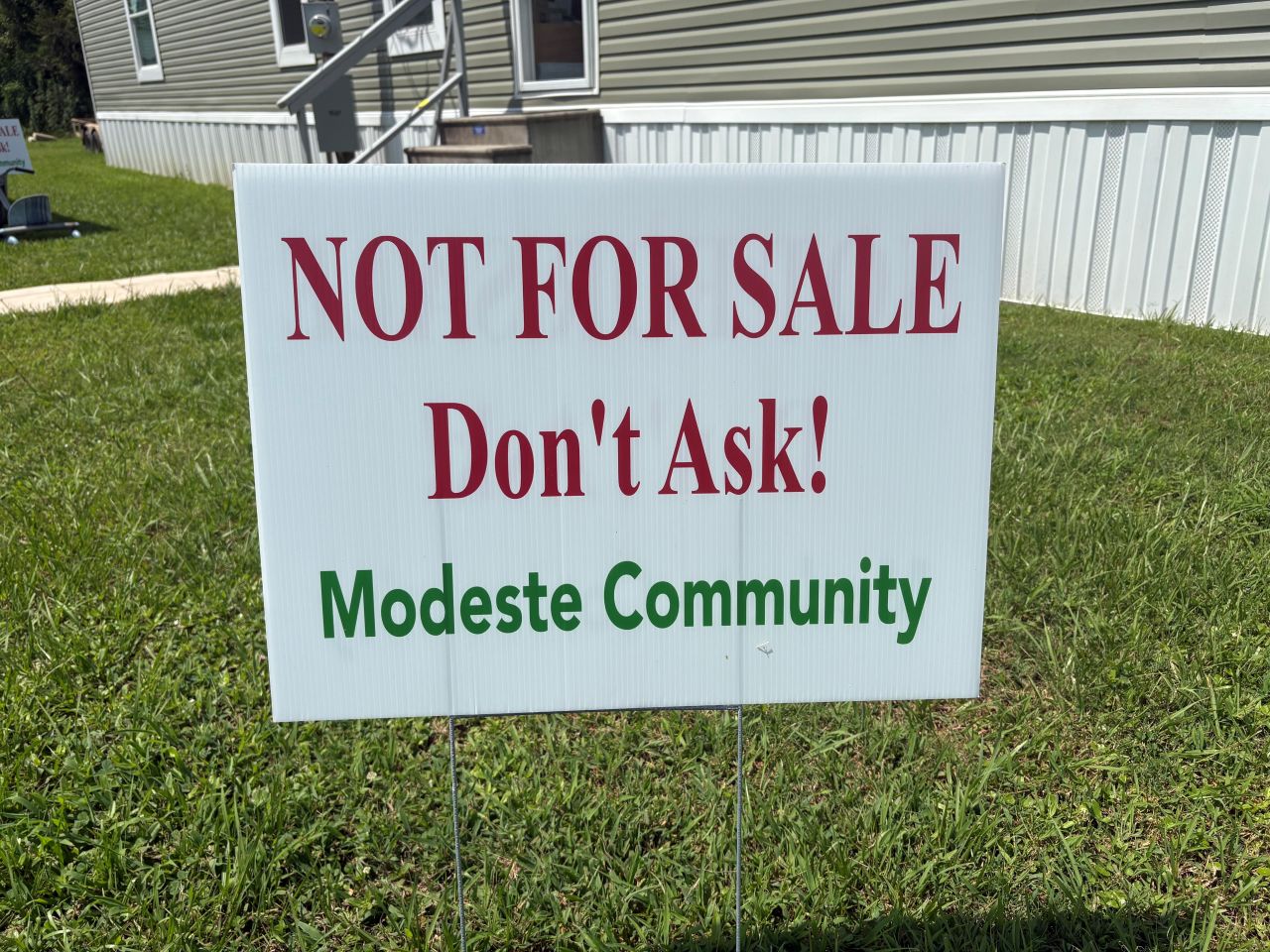
Mary Ann Geason, 65, another local resident, was adamant that she would not take a buyout and not be forced from the home she loves. “No and no and no and no!” Gleason insisted. “I’m not entertaining any offers at all. If they try, I will cuss them out.”