Growing use of secrecy agreements between developers and local governments troubles advocates of open government

When local elected officials in Ascension Parish, Louisiana, began negotiating to remove an historically Black community beside the Mississippi River for a 17,000-acre industrial complex, the officials signed what amount to gag orders promising to “protect the secrecy” of the project, according to documents obtained by Oil & Gas Watch News.
Chase Melancon, chairman of the Ascension Parish Council, and others in local government signed the “non-disclosure agreements” with Louisiana Economic Development on Sept. 19, 2024. They promised to “respect the confidentiality of any conversations or meetings in which you may participate and will keep confidential anything discussed.”
The non-disclosure agreements surrounding the RiverPlex Mega Park project infuriated some local residents in Modeste, who are now in court challenging them. The residents are angry their elected representatives won’t be able to answer important questions about a major development project that is receiving at least $600 million in taxpayer subsidies.
An unknown number of the 600 residents of the community of Modeste and neighboring Donaldsonville are expected to be removed for the industrial park through buy-outs and relocation. Those left behind, after buyouts, could suffer air pollution from a proposed Hyundai steel plant, a power plant, and two proposed factories that would manufacture ammonia from natural gas.
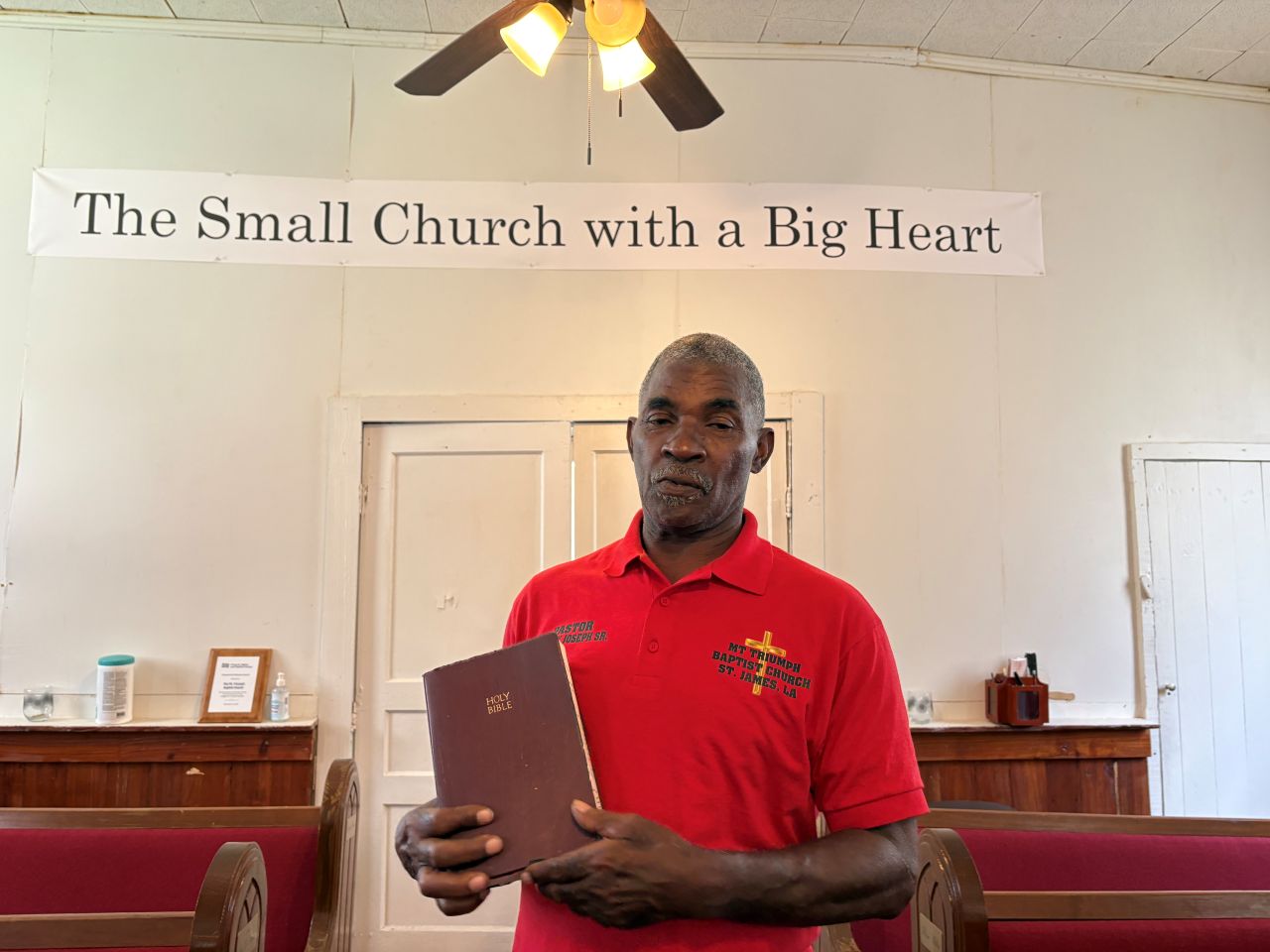
Rev. Harry Joseph, a local pastor and vice president of Rural Roots Louisiana, a nonprofit group working with advocates at the Louisiana Bucket Brigade to fight the Mega Park and its non-disclosure agreements, said that it’s wrong for elected officials to operate in secret through “NDAs.”
“They signed an agreement saying that they would not talk to the people in the community and let the people know what’s going on,” said Joseph. “They are trying to withhold information from the community. For an elected official to sign an NDA is just wrong – because we elected them on our behalf and not to try to do things under the table.”
Developers and local governments across the U.S. that want to avoid public debates with local residents about controversial projects – from data centers to solar farms and petrochemical plants – in recent years have increasingly employed NDAs as a tactic to keep things quiet and out of the press until deals are complete, according to observers of the industry.
An NBC News investigation in October found that in a majority of 30 data center projects examined nationally, local officials signed NDAs with the developers. They often worked with shell companies to further conceal the identity of the companies behind the projects.
The use of what are essentially gag orders for elected officials has become increasingly common in states including Louisiana, Virginia, Pennsylvania, and Indiana.
Lawmakers in Louisiana in 2024 passed a new law (House Bill 461) that also makes it easier for governments to keep documents related to development projects confidential if local officials argue that their public release would have a “detrimental effect” on business negotiations.
The chairman of Ascension Parish Council, Chase Melancon, and Ascension Parish School Board member Taft Kleinpeter, did not respond to emailed questions about the NDAs they signed concerning the RiverPlex Mega Park project.
Emma Wagner, communications director with Louisiana Economic Development, the state’s economic development agency, defended the state’s frequent use of NDAs. “Non-disclosure agreements are a standard and necessary part of economic development negotiations in every state across the country,” Wagner said. “They protect proprietary business information while companies evaluate potential investments.”
Hannah Wiseman, a law professor at Penn State Dickinson Law School, said that she has seen developers use NDAs with landowners signing leases for hydraulic fracturing for oil and gas, solar farms, and data centers, primarily in an attempt to avoid protests from “Not in My Back Yard” opposition.
But she said that governments signing NDAs is a newer trend. She said the use of these secrecy agreements by local governments shifts the practice to a new and more disturbing level – because it prevents voters from knowing what their own elected representatives are doing in office.
“Local governments signing NDAs – that is a different scenario, because local governments are supposed to be accountable to their residents,” Wiseman said. “There is a large body of law saying that even when local governments enter into agreements with developers, they are supposed to do so in a public setting and ensure it is in the public interest.”
In central Pennsylvania, Montour County officials signed a non–diclosure agreement with Talen Energy over a proposed rezoning of farmland for a data center and gas-fired power plant expansion project. The move was criticized by a media watchdog group for “raising a red flag” about open government. The county council then voted against the rezoning.
Eric Bonds, a professor of sociology at the University of Mary Washington in Virginia, said he examined 31 local governments in Virginia where data centers were proposed in 2024 and 2025. He found that 80 percent of them (at least 25 of 31) had signed NDAs with the developers.
After Bonds and a colleague published an article on the subject in the Virginia Mercury, he said he heard from people all over the country – including in Indiana, Arizona, Louisiana and elsewhere – that these kinds of government secrecy agreements are becoming increasingly common to speed development projects.
In some cases, NDAs are not legal, he said. This is because they are ambiguous and overly broad, and their secrecy provisions will not hold up in court because they conflict with existing state public records laws and open meeting laws. But NDAs can work to intimidate community groups and avoid public scrutiny.
“It could be the increasing power of corporations and local governments being starved for revenue,” that are factors driving the increased use of NDAs by local governments nationally, he said. “That kind of combination becomes rife for secrecy.’”
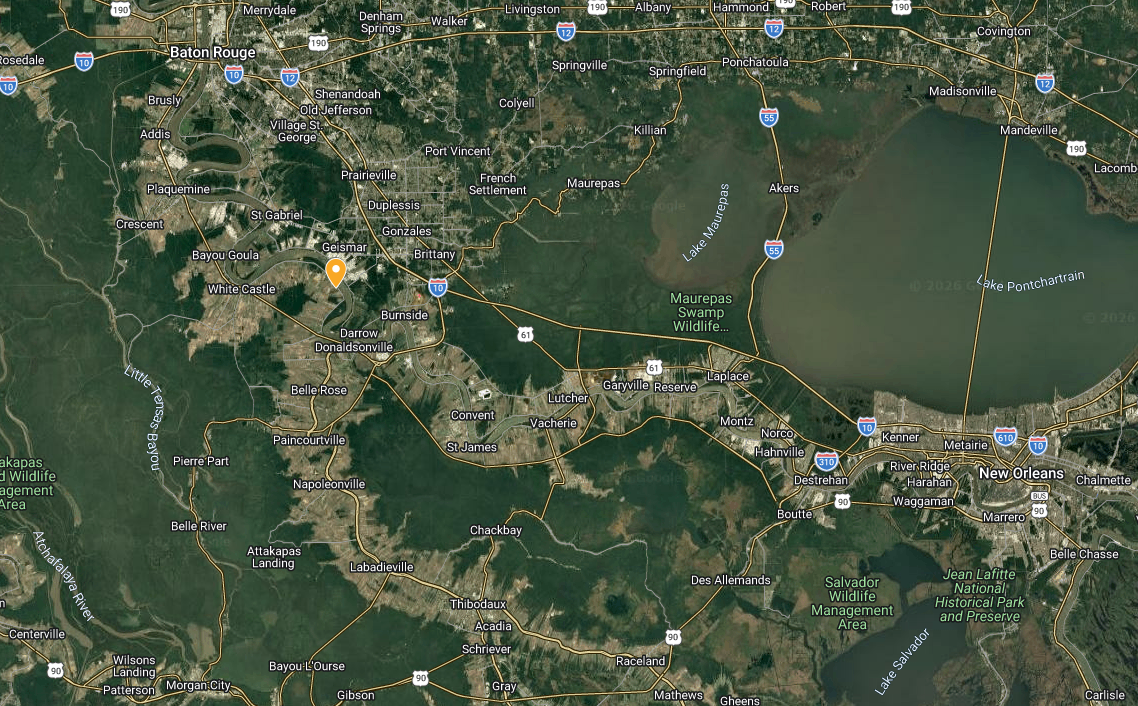
In Ascension Parish, Louisiana, the RiverPlex Mega Park project has a goal of attracting industrial development to a 17,000-acre site along 10 miles of the Mississippi River between Baton Rouge and New Orleans and near major rail lines.
If all goes according to plan, Korean automaker Hyundai could build a steel plant in the Mega Park. The site could also host two massive ammonia manufacturing plants -- the Ascension Clean Energy Facility and CF Industries' Blue Point Complex -- which would make ammonia from natural gas and pump the pollution underground as part of carbon capture systems. It would also be the location of a new gas-fired power plant.
But to make room for all this, many residents in the community of Modeste would have to be bought out. About 600 people live in the community today, mostly working-class families and people of color on land that was the home of sharecroppers and before that, a plantation with slaves. Over the years, the community – with a median household income of $31,000, less than half the national average – has been chronically neglected by local and state government.
Ascension Parish has advertised for companies to direct the buy-outs of local residents in Modeste. And so far, four companies have submitted proposals to coordinate the buyout process, including the Grant Management Group.
“The RiverPlex Mega Park of Ascension Parish represents a transformative opportunity for the region,” wrote Cedric S. Grant, principal of the Grant Management Group in a proposal. “Our team is uniquely positioned to deliver a proposed buyout and relocation program that is not only technically sound but also deeply empathetic to the needs of the community.”
The problem is, many of the residents do not want to leave.
Kee Kee Julien-Judson, a member of Rural Roots Louisiana who grew up nearby in Donaldsonville, said that Modeste is where her father lived, where her grandfather was born, and where his ancestors labored on a plantation. She said the unmarked graves of slaves are in the area targeted for development.
Julien-Judson said she is concerned that the parish is proposing to only buy out some of the local residents-- meaning that others will be left living beside a massive industrial facility, breathing in its air pollution. As a realtor, she said she knows that some of the prices being offered for buyouts are unfairly low, which she said often happens in Black neighborhoods.
“There are a lot of older people in Modeste -- people in their 60s or 70s who are worrying themselves sick about this,” Julien-Judson said. “They worry: Where are they going to go? What are they going to do if they are forced off their land?”
Worsening the threat of land seizure through eminent domain, she said, is the fact that the officials leading the charge for the community’s removal have signed secrecy agreements to speed the process forward.
“How can one effectively represent a citizen if you can’t disclose what you are doing for them or about them?” Julien-Judson asked. “Non-disclosure agreements should have never been signed. You cannot effectively represent me if you cannot talk to me.”
Anne Rolfes, executive director of the Louisiana Bucket Brigade, said that the state economic development authority is trying to brush off the use of non-disclosure agreements as business as usual and no big deal.
“In fact, this is an absolute assault on democracy,” Rolfes said. “There is a $600 million incentive package for this project using state money. Everything about it needs to be public.”
Pam Spees, an attorney at the Center for Constitutional Rights who is representing the Louisiana Bucket Brigade and Rural Roots Louisiana in a lawsuit over the NDAs, said that on Feb. 13 a judge ruled that the parish had to give him the agreements to evaluate for their legality. The outcome of that examination is still pending.
“What is so awful and troubling about this is that these parish officials have signed these agreements and are maintaining confidentiality to discuss projects which will require the forced displacement of a whole community,” Spees said. “The community doesn’t even know this is happening and that they face displacement. And they might not know until it’s too late.”
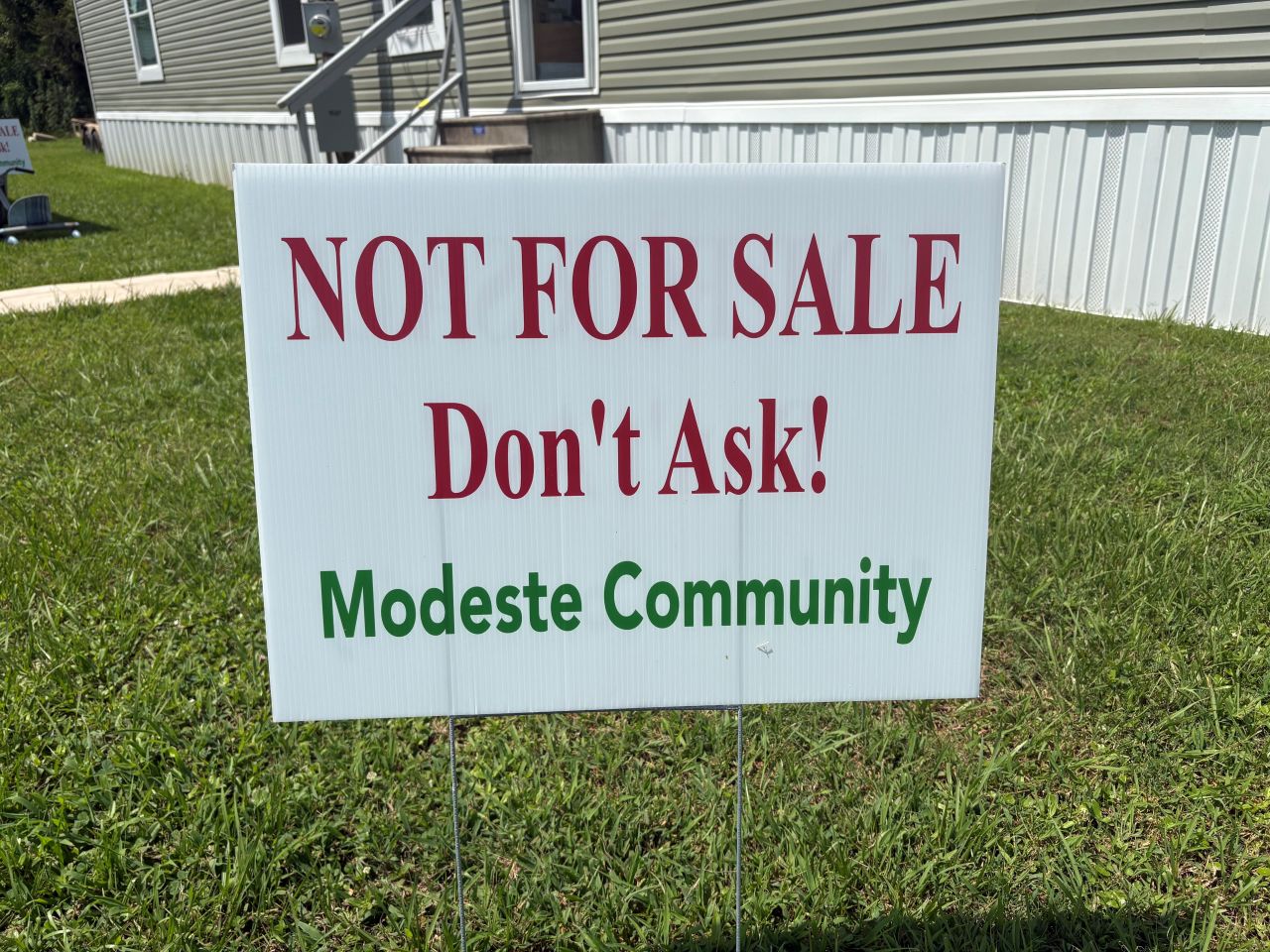
Lead photo: A not for sale sign in Modeste, Louisiana. Photo courtesy of Louisiana Bucket Brigade.